Saturday, February 8, 2014

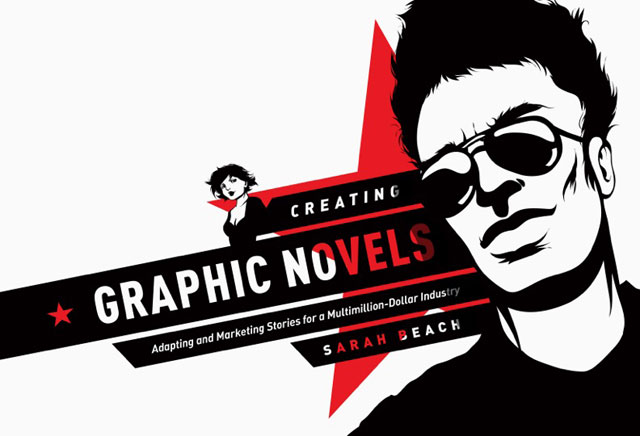
Early Review of CREATING GRAPHIC NOVELS by Sarah Beach

Title: Creating Graphic Novels

Author: Sarah Beach

Publisher: Michael Wiese Productions

What It's About: In Creating Graphic Novels, Sarah Beach introduces screenwriters to the world of graphic novels, outlining the important differences between screenwriting and graphic novel script writing and why graphic novels are an important part of getting a story to spread.

Why I Read It: I love graphic novels and I love screenwriting. I was offered an advance copy of the book from Michael Wiese Productions, so I jumped at the chance to read it.

What I Liked About It: I came to this book knowing that I love the graphic novel format of storytelling. What I loved about this book is the context the author starts from on why a screenwriter would want to adapt their story into a graphic novel. The author starts from the context of building an audience around your story through a graphic novel representation and using this platform to show that your story has the power to engage an audience. The format of the book lends well to teaching the reader about graphic novel creation with the frequent interruptions by a graphical character called "Professor Exposition." Reading the book, a screenwriter will learn how to adapt a story for a graphic novel, as well as learn about the graphic novel industry. It's a fun book and very helpful.

What I Didn't Like About It: It's a unique book that will help screenwriters get into writing for graphic novels. The book is well done, and there really wasn't anything I didn't like about it.

Review copy provided by Michael Wiese Productions

Where You Can Buy It: I got an advance copy of the book, and I'm not sure on the release date. Check out Michael Wiese Productions or Sarah Beach's website for more information.

Friday, February 7, 2014

Flash Fiction Friday: The Journal, Part 1

I always thought it would be fun to blog an ongoing series of episodes of a story. Writing a new chapter in the story each week is interesting because I get to discover along with anyone who reads it what's going on in the story. Here's part one of my first attempt at an episodic story.

The Journal, Part 1

Sara's eyes snapped open. The last thing she remembered was the sky on fire, but the sky above her was black and dotted with stars.

"How can this be?" she said.

She remembered all the people dying. The world ending.

So how was she alive?

The ground beneath her was wet. The grass was soft.

Where was she?

Though her back was screaming in agony, she pushed herself up. She was on a hill overlooking a city. A bright and very much alive city.

How?

The city was destroyed. She knew it.

As she was pushing herself up, she felt something leathery under her right hand.


A book. A journal.

She opened it. Several pages were ripped out, and the ones that were left were blank.

Except one.

On the last page she saw words scribbled in black ink.

Despite what you believe, the world ended.
I saw it all, and I know who really caused it.
But if I told you now, your life would be in much more danger than it already is.
What you see is real, but it's not what you think it is.
Just know that you're not crazy, Sara.

-Jack

Jack? Who is Jack?

Something was wrong. She lived through every moment of the end, but as she looked down at the city below, she saw no evidence of the horrible nightmare she and everyone else went through.

Wait, she thought. The gun shot.

She was shot. She knew it. She passed out from the loss of blood. But the wound in her stomach was gone. Her shirt had been soaked in blood, but now it was untouched.

"I know what I saw," she said. "What's happening?"

Fighting the blurring of her vision, Sara grabbed the journal and ran down the hill toward her home. It shouldn't be there, but somehow she knew it would be.

She ripped open her front door, half-expecting to wake up from this nightmare she found herself in.

Her heart stopped at the sight she saw on couch.

She watched the man she loved the most die at the hands of an evil man, so how could this be?

"Daddy?" she said.

To be continued in Part 2

Photo Credit: karimiaz via PhotoPin CC

Thursday, February 6, 2014

Review of WHAT'S YOUR WORLDVIEW by James N. Anderson

Title: What's Your Worldview?
 
Author: James N. Anderson
 
Publisher: Crossway Books
 
What It's About: What's Your Worldview? reads like a choose your own adventure book. Anderson guides readers through a series of questions, and depending on how you answer, you'll be led toward the next question on the path to discovering your worldview.
 
Why I Read It: I love trying to understand the different worldviews from which people live their lives because what we believe about the world affects how we live in the world. I was also interested in the book because it was being marketed as a choose your own adventure type book.
 
What I Liked About It: I read this book in one day. I love the way it feels like you're taking a journey to discover what you truly believe about the world. I love stories, and the format of the book was a fresh approach. For that alone, I think this book is a great one for anyone to read to discover more about themselves. I love how Anderson makes very careful distinctions between some of the worldviews. There are many theistic worldviews, but only one of them is distinctly Christian. 

If you read this book, especially as a Christian believer, you'll understand more about what you believe and more about what others believe. It's fun to take the journey and answer the questions the opposite of what you believe to see where you end up. This is a unique book, and I would gladly recommend it to anyone.
 
What I Didn't Like About It: This book was so good that there's nothing I didn't like about it.

Review copy provided by Crossway Books through their Beyond the Page reviewer program
 
Where You Can Buy It: Amazon.com
 

Wednesday, February 5, 2014

The Danger of False Assumptions: Keeping Creativity and Discovery in Balance

Our minds have an incredible ability to fill in the blanks. Think about it. If you've been trying to call someone you're close to for several hours and they don't answer, what happens? Your imagination takes over.


Suddenly, your mind is creating multiple narratives to explain why the person isn't answering their phone. Some of the narratives are good, but I would bet most people's imaginations automatically run to a string of worst-case scenarios.

Interestingly enough, we are all inherent storytellers. It seems to be designed into us. Give us an incomplete picture of a situation, and our minds will rush to fill in all the gaps.

I think the inherent storyteller in all of us is a great thing, and I think the world would be a much greater place if everyone both recognized and embraced their creative side.

But there's a danger as well.

Sometimes our imagined narratives turn into assumptions about a situation. The narratives we create to fill in the blanks of a situation aren't usually limited to just one. 

For example, why is he not texting me back? The possibilities are endless, but we'll imagine just a few:
  • He's angry about something I said to her earlier
  • He misread my text message with the wrong tone
  • Someone stole his phone
  • Someone kidnapped him
  • He got into a car wreck
  • The battery on his phone died
As you can see, each of these created narratives that are formulated to fill in the blanks of the situation are possibilities. That's an important distinction. Narrative possibilities don't demand that we believe one is absolutely true. We can't know which, if any, is true until we gain further information about the real story.

But we often ski a step, jumping from many narrative possibilities to one narrative assumption. We go from completing the picture with many possibilities to trusting that we know exactly how the picture should be completed.

The danger is that we often make decisions based more on narrative assumptions than possibilities. And we could be wrong.

Imagine again the scenario that you've called your best friend multiple times and they don't answer. Your mind will automatically develop multiple possible explanations for why they won't answer, but then it happens. You come upon that one explanation that, in your mind, makes the most sense, and you latch onto it.

Welcome to the land of assumptions.

So what's the verdict? Why aren't they calling back? They're ignoring you because they're hanging out with their much cooler friends, of course. They can't be seen talking on the phone with you. How dare they?

Suddenly, you're devising all the possible ways you can get back at them for treating you so poorly. Meanwhile, your best friend's phone is in their couch where they lost it hours before, and they've been searching frantically for it ever since.

The danger of jumping from narrative possibilities to narrative assumptions is that we stop searching for answers. We think we've already got them.

But we don't.

Many of life's events provide for us a source of mystery. Our role is take the possibilities we create and do the work to discover the genuine answers to the mysteries.

As inherent storytellers, we're called to both discover and to create. We can't create to the neglect of discovering. 

We have to keep learning. Keep asking questions. Keep discovering.

Let the possibilities be endless and let the assumptions be few.

Where have you allowed assumptions to incorrectly guide how you saw a situation?

Photo Credit: wilhei55 via PhotoPin CC

Tuesday, February 4, 2014

Review of LIVING IN CHRIST'S PRESENCE by Dallas Willard & John Ortberg

Title: Living in Christ's Presence
 
Author: Dallas Willard
 
Publisher: InterVarsity Press
 
What It's About: Living in Christ's Presence contains some of the final thoughts on Christian living that the late Dallas Willard had to say before his death in 2013. Drawn from conference talks with Willard and John Ortberg, the book revisits much of the thought for which Willard is most appreciated.
 
Why I Read It: I've been hooked on Dallas Willards's writings since I read his book The Divine Conspiracy a few years ago. Willard is a fresh voice in the area of spiritual formation and any Christian would benefit from reading his works.
 
What I Liked About It: I love the way this book is formatted as a dialogue between Willard and Ortberg because I love the way Willard interacts with the content. This book features some really insightful thoughts on the makeup of a person, and how faith in Jesus impacts the inner nature of a person. Willard does a great job of showing Christianity to be a faith that is full of knowledge. It's not just blind faith that we rely on. We can know God, his kingdom, and our ability to influence its presence in the here and now. The book elevates Jesus and his kingdom, and it's the kind of book that drives you to the Bible, desperate for more of Jesus.

Review copy provided by InterVarsity Press
 
Where You Can Buy It: Amazon.com

Monday, February 3, 2014

Social Media: The One Question We Should Be Asking Before Posting

How many times have you been frustrated by something someone posted on Facebook or Twitter, or any of the other social media networks?


I would be willing to bet that there is one question that a person asks themselves, either consciously or unconsciously, before posting to social media, and it's killing someone else's experience of what could be a really great tool.

How will this post make me look?

It's a valid question, and it makes sense why we would ask it. I think most people want to have a significant level of control over the way people perceive them. We want people to think we have it all together. Or we want people to think we don't have it all together at all.

That's the problem. Social media can be used for incredible good. If you have an idea that's worth spreading, social media makes that possible in ways that we've never had before. We can stay connected with people we care about and be stay knowledgeable about what is going on in the world. But social media can quickly devolve into a place where many people post with one of two troubling motivations:

  • To make themselves look better than they are
  • To make themselves look worse than they are

With social media, no one has to know your imperfections, or we at least can control whether or not they're seen. We can use social media like a reality TV show where we edit all the negative parts out. Makes perfect sense. Few people want their baggage on display for the world to see. 

But the temptation for many can be to take it a step above editing all the negative parts out. They start to bring in the visual effects and marketing departments of their imaginations to give their image a little face lift.

Of course, not everybody does this, so what I'm about to point out doesn't apply to everyone. But we've all seen it, right? There are some people who try to chronicle every moment of their lives on social media and try to appear to have the picture-perfect life on Twitter or Facebook, yet we have reason to believe they're holding back the less-than-glamorous moments in between the perfectly choreographed and creatively filtered Instagram photos. Of course, posting Instagram photos can be a great thing. Pretending nothing ever goes bad for you is not.

Then there are the people who use Facebook and Twitter to share some really great things they did for somebody else. This doesn't always come across this way. I think it's all in the way you present it. But many people use social media as a platform to say, "Look at me and the awesome things I've done. Press 'Like' or retweet if you agree." 

Probably the most attention-getting type of post in my mind is when someone posts a vague status or photo that leaves people in a complete mystery of what's going on. For example, "Never imagined something like this would ever happen to me." Something like what? Oh, I get it. I have to ask to find out. Clever marketing ploy if you're trying to get people's attention, but why do we feel the need to get people's attention.

Finally, on social media, people often state their opinions without worry about how it affects someone else. If someone disagrees with something someone posted, this urge to press the comment button starts screaming loud and clear in our minds. If we disagree with someone about something, the thing to do would be to go to that person privately, but with social media, we often take our rants public. "Dear _______, You might think it's okay to cut me off while I'm driving down the road, but I personally think you're an idiot, and now everyone else does too. Thanks :)."

The grammar police would fall under the opinion category. If someone has to worry about whether or not they put their commas in the right place and decide not to share something because they're worried you're going to tear them apart for their grammar, there's a problem with you, not them.

Why do we do it? I think it's about not wanting someone to get the one-up on us. It's an unfortunate trait of human nature that we often find our value by comparing ourselves to others, which often means we need to elevate ourselves above others.

It frustrates people. We know people aren't perfect, and C.S. Lewis pointed out long ago that pride is the one thing we all struggle with and that we can't stand to see in someone else. When people see others who appear to be perfect on social media bragging about their apparent perfection, it makes people feel bad. Everyone struggles with insecurity, and the feeling of needing to keep up can be exhausting and self-defeating.

The Other Side of the Coin
Ironically, people don't always use social media to directly elevate themselves. It's more of an indirect elevation. They use it to make themselves appear worse than they are. It's the idea of, "You think you've got it bad? Let me tell you my story." Once again, we don't want to be one-upped by somebody else, so we edit the negative parts back in to our overall narrative and, once again, bring in the visual effects and marketing teams to spice it up a little bit. 

"Your kids woke you up at 6:00 this morning? Let me show you this carefully cropped photo I took of my kids getting up at 5:00."

"You've been sick the last week? Sorry to hear that. I've been sick the last three weeks."

Once again, I think we're often driven by a desire not to be one-upped by someone else. We don't want people to think they have it worse than us.

The Question We Should Be Asking
Social media is a great tool that can be used for great things, so why let it devolve into another area where we let self-centeredness rule the day? How many people have been going along having a great day until they read something someone posted on Facebook or another social media network that frustrated them? There's a question we should be asking before we post anything to social media.

How will this make people feel?

Let's not worry so much about being the PR department of our lives. Wouldn't social media be so much better if we found people sharing things that made us think and brought encouragement, rather than tearing us down? Who doesn't like to feel like something someone said breathed life into their day?

Instead of "How will this make me look?," which is all about controlling what people think about us, why not ask, "How will this make the people who will read it feel?" How could I speak life into someone today?

Not everybody uses social media to control other people's perception of them. There are some people who use social media in a way that inspires, encourages, and gets people thinking.

Wouldn't it be great if everyone was like that?

Photo Credit: FindYourSearch via PhotoPin CC

Saturday, February 1, 2014

Weekly Intake

Here are a few of the things I enjoyed reading and watching this week on the Internet.

The "Full House" Guys Reunite on Jimmy Fallon
Jimmy Fallon is one of the most creative guys around. He's always funny, and he works hard to entertain his audience. It's seems like Fallon is always bringing his A-game. In this video, the characters of Danny Tanner, Uncle Jesse, and Uncle Joey talk Jimmy Fallon through the emotions of leaving his show to host "The Tonight Show." The scene is in true "Full House" style. I loved "Full House" when I was a kid, and this was a great scene.

First Clip of the Nicolas Cage Left Behind Reboot 
I was a fan of the Left Behind series of books when I was in high school, and I thought the original movie series was alright for what it turned out to be. I've since found myself disagreeing with some of the theology behind the books, but you just can't ignore the concept of Nicolas Cage rebooting this movie. This is the first clip, and it's definitely not Cage's best work, but I'll probably see the movie whenever it finally releases out of sheer curiosity.

Build With Legos in Google Maps
I loved Legos when I was younger. Honestly, I probably love them even more now (I have three kids, so I have a responsibility to play with them now). And now you can build Legos structures within Google Maps. That's incredible.

Jon Acuff's 10 Horrible Blogging Tips
Cover your blog posts with selfies.
Beg your Twitter followers for a retweet.
Write extra long blog posts.
Every blogger wants to be a good one. Jon Acuff gives ten ways that you're guaranteed not to. Few bloggers are as funny as Acuff and as knowledgeable about the blogging world.

Jared Hogan - The Fatal Place
This week I discovered Jared Hogan, the head of the film team at Elevation Church. In this blog post, he shares some really helpful insight into their creative process for a short film they did last Easter called "The Fatal Place." I love filmmaking and storytelling, and I love seeing the behind-the-scenes of someone's creative process. I love what he shares about animatics when he says, " if the idea doesn't work on paper, it most likely will not work on screen." The post includes photos of the notebooks where he worked through the script, the animatic video, and the full video of "The Fatal Place."

Pray for Your Daughter eBook
I just discovered this "pray for your daughter" challenge ebook from Mike Leake this week. I have a little girl named Lucy, and I pray for her all the time that her life would be better than I could ever give her on my own. This is a great idea for fathers of daughters.

Books I'm Reading This Week:

Marvelous by Travis Thrasher
I had the opportunity to read this book early. It's a young adult novel about a boy named Brandon who meets a girl named Marvel who is a complete mystery. Terrible things start happening in the town, and it becomes clear that Brandon and Marvel are about to be wrapped up in something bigger than them.

The Artisan Soul by Erwin McManus
This is another book I'm reading before its release. I've always loved McManus' approach to life and creativity. This book is about human beings as creative beings and how to live your most creative life.

The Shadow Throne by Jennifer Nielsen
The third book in a trilogy, this book is really good so far. The series is about a reckless and arrogant boy named Jaron who somehow becomes the king of a nation that is nearing war. In this book, the war is coming, and Jaron must prove he can be a great king or die trying.

Futureville by Skye Jethani
This book is incredible so far. Jethani calls believers to live in light of the kind of the future the Bible promises. He also uncovers the many false beliefs people have about the future and how it affects how they live in the present.