Tuesday, June 18, 2013

Review of THE INTELLECTUAL WORLD OF C.S. LEWIS by Alister McGrath

Alister McGrath's biography of C.S. Lewis was an incredible exploration of one of the greatest minds in the history of Christian thought. I've always enjoyed reading Lewis because of the way he explains concepts in a way that is refreshing and inspiring. I found McGrath to have that kind of way with words in his exploration of Lewis' life. He takes the exploration a step further in a new companion book to the Lewis biography, THE INTELLECTUAL WORLD OF C.S. LEWIS.

THE INTELLECTUAL WORLD OF C.S. LEWIS is a collection of essays that take a deeper look into some of the ideas in Lewis' writings and the intellectual landscape that influenced much of his thinking. McGrath looks at Lewis' own autobiography and convincingly shows that Lewis' own chronology of his conversion was incorrectly remembered. He looks at the philosophical landscape at Oxford and its impact on Lewis. We're shown the role of the concept of myth in Lewis' acceptance of Christianity. McGrath looks also at Lewis' apoligetic method, his argument from desire, and his role as a theologian.

While McGrath's biography of Lewis was an illuminating exploration of what shaped the man who would become one of the most quoted men of all time, THE INTELLECTUAL WORLD OF C.S. LEWIS takes us on an even deeper journey into the development of Lewis' thought over time. It's clear that McGrath drew from a vast amount of research, and this book takes the reader into some territory that will undoubtedly leave them better equipped to engage in intellectual discussion concerning the things that captured Lewis' above all else.

Review copy provided by Wiley-Blackwell

Photo Credit: Wiley-Blackwell

Review of GLIMPSES OF GRACE by Gloria Furman

I read a lot of books on the Gospel and how to apply it to everyday life. My wife is an incredible woman and mom to our three young children. When I discovered there was a book about the Gospel in the midst of living everyday with the joys and struggles of being a mom, I knew it was something I wanted to check out.

GLIMPSES OF GRACE by Gloria Furman is a book about seeing the life of being a mom through the lens of what Jesus has done in the Gospel. As my wife has been reading it, I've been reading it as well to better grasp how to understand the role she has been placed in as the mother of our children. I'm encouraged by Furman's clear exploration of the Gospel and its implications in the mundane areas of life. The author encourages moms to rest fully in the work of Jesus.

I'm blessed to be married to a woman who loves our children deeply and cherishes the opportunity to help them understand and embrace the Gospel in their lives. GLIMPSES OF GRACE serves as practical encouragement for living in light of the Gospel as a mom.

Review copy provided by Crossway Books

Photo Credit: Crossway Books

Monday, June 17, 2013

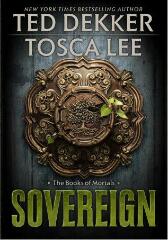
Review of SOVEREIGN by Ted Dekker & Tosca Lee

It’s been fifteen years since Rom Sebastien learned the truth that everybody in the world was dead, stripped of all emotion but fear. Six years ago, Jonathan, the boy the ones who were awakened to emotion and known as Mortals believed would bring life to the world through his blood and become the true Sovereign, was killed at the hands of Saric, the leader of the deadly Dark Bloods. Rom, Jordin, and a few other Mortals believed they were meant to take Jonathan’s dead blood and bring love and life to the world. They began calling themselves Sovereigns. Though they were once many, they have been hunted and many of their number killed by Dark Bloods and the ones once aligned with Jonathan while he was alive, now known as Immortals. The Dark Bloods and Immortals are both more powerful than the Sovereigns. Roland and his band of Immortals want to rid the world of Sovereigns and Dark Bloods and rule Byzantium as the superior race. The Sovereigns are on the brink of extinction. One of their own has released a virus that will kill Dark Bloods and Immortals alike, leaving the world with only Corpses and the remaining Sovereigns. The virus, like the virus that stripped the world of its emotions generations earlier, will return the world to one void of life. Rom knows this isn’t the way Jonathan would have wanted. He goes to Feyn, the now ruthless leader of the Dark Bloods, to foolishly plead for her surrender to Sovereign blood, which Jordin goes to the Immortals to one as one of their own to find a way to preserve Sovereign blood. As the Dark Bloods and the Immortals, combined with the deadly virus, close in, the Sovereign blood, and the life and genuine love it is supposed to bring, is in danger of becoming permanently extinct.

SOVEREIGN is the conclusion to The Books of Mortals trilogy by Ted Dekker and Tosca Lee. The Books of Mortals is an allegory of the redemptive history told in the Bible, and it brings much that humanity wrestles with to the forefront of your thoughts and emotions as you’re reading. Trilogies are always my favorite types of stories, and the third book in a trilogy is always almost always an incredibly intense ride to the finish. SOVEREIGN is no exception. The stakes have never been higher. No one is safe, and Dekker and Lee make it clear that by the end of this book, either the world will be alive again or death will finally reign permanently supreme. And there were certainly moments in the story that I wasn’t sure how this could end up okay in the end, or even what okay was going to look like. Ted Dekker has a way of painting a situation as hopelessly impossible as can be, and this ability to create heart pounding suspense has always been one of my favorite parts of his writing.

In the first two books of the series, the main protagonist of the story was Rom Sebastien. In SOVEREIGN Jordin steps into that role. Rom is, of course, in the novel, but not as much as you would expect given his role in the story. In fact, there are no scenes told from Rom’s point-of-view. While I thought the story was good and it kept me interested all along, I wished that Rom’s point-of-view hadn’t been taken out. However, the way the story progresses, it does make sense why we wouldn’t see into Rom’s inner world, so I can understand why Dekker and Lee might have done it.

Jordin’s journey is one that feels tragic most of the time. She loved Jonathan, but Jonathan is gone, and though she wants to believe that he lives on beyond death, she feels alone. Being Sovereign doesn’t seem like she would have thought. Or like any of the Sovereigns would have thought. This is one of the themes that resonates throughout the story: who is it that is truly alive? Can you tell from outer appearances who is really alive? Does being alive mean being well off in life?

The Sovereigns are greatly misunderstood in what they are trying to do. More than that, Jonathan’s desires are greatly misunderstood even by the Sovereigns. What is the life that Jonathan came to bring? What does it look like? Would it meet their natural expectations? As the story moves along, nothing is what it seems. Dekker and Lee introduced a story in which we came to believe that the solution to the story problem was life and a restoration of emotions, but, much like God did through the Bible, they reveal to us that the story solution isn’t what we think. It’s much more, and it doesn’t look like we expect.

As an allegory SOVEREIGN perfectly captures the struggle that Christians and non-Christians alike have with what it means to truly be alive. Jesus was greatly misunderstood, just as Jonathan was in this story. And at times it feels like we’re utterly alone and that Jesus isn’t there, much like the Sovereigns felt in the story. It’s in this story that Dekker and Lee show us what it means to truly love and trust Jesus and what being alive truly looks like.

I loved SOVEREIGN and hated to see it end, but I felt like I had learned something incredibly important through its story. The Books of Mortals series was a brilliant recasting of redemptive history that will stay with me for a long time.

Review copy provided by FaithWords

Photo Credit: FaithWords

Friday, June 14, 2013

Blog Tour Review of TORN TO HEAL by Mike Leake

TORN TO HEAL by Mike Leake is a biblical look at the role of suffering in our lives. The problem of suffering is inevitably one that everyone struggles with at some point, especially if you believe in an all-loving God who wants good for those who believe in him. Leake looks at suffering as a way in which God refines believers, developing their character and their faith. He does this by appealing to a story in the book of Hosea where God compares himself to a husband who has been cheated on by with his wife, the nation of Israel. In this particular story, God personifies himself as a husband who takes away all the good things that he gave his wife and strips her bare before all of her adulterous lovers. Honestly, it’s a pretty intense and disturbing scene. Leake uses this story and several other passages of Scripture to describe a God who loves his people enough to “tear” them so that they can be healed. The goal of the book is to outline some surprising benefits to suffering.

No doubt the Scriptures indicate that suffering tests our faith in God and provides an opportunity to grow. I like how this book encourages us to see suffering as an opportunity to grow. However, the book takes a deterministic approach to God’s causation of every event that happens in history. This, of course, means that all suffering is ultimately intended by God, even if it is immediately caused by secondary agents. And if you believe that suffering is meant to help you grow, then it’s not far off to assume that every instance of suffering that ever happens is meant to bring about some good in the world. As Paul said, “Everything works together for good for those that love him.” But what about when people don’t grow from suffering? What if it breaks them instead? What about unbelievers? Surely, suffering sometimes leads unbelievers to embrace Christ, but not always. Though I agree with the author that suffering can be opportunity for our faith to be tested and for us to grow, it seems like a deterministic approach to God’s sovereignty would lead someone to honestly raise the question of why there is so much wasted suffering in the world. Why is there so much suffering that produces no good at all?

Another concern I have with the common approach to suffering is that people begin to replace God’s role in their lives as God with something I call “the event catalyst.” What is supposed to cause us to change? God, obviously. That’s his role as God. If God changes us and acts as the catalyst to our change, then he is indeed the God of our lives. But sometimes people only change as a result of suffering. I won’t argue that some people are driven to God and change as a result of what they come to believe about God in the midst of their suffering, but I believe many people rely on suffering as an event catalyst to change. When suffering and not God causes us to change, the suffering replaces the role of God. Does God use suffering to bring about change in us? He can and does. But is it necessary? Only in so much as we, as fallen creatures, won’t submit otherwise. God wants to us to place our faith in him and change as a result of our faith in him. I believe suffering is used by God, but may not be in every instance intended by God specifically to bring about change in us.

Obviously, I’ve raised a lot of questions, and there are many others that I have on the subject, but as this is a review of TORN TO HEAL, I want to simply say that I appreciate Leake’s heart toward helping people wrestle with this difficult issue. It raised some questions in me, especially concerning the episode in Hosea that I will continue to wrestle through, so I appreciate him facing the issue head on. Definitely check out the book and be encouraged to latch onto Christ in the midst of suffering.

Review copy provided by Cruciform Press

Photo Credit: Cruciform Press

Tuesday, June 4, 2013

Review of WHO CAN BE SAVED? by Terrance L. Tiessen

In his book WHO CAN BE SAVED? author and theologian Terrance L. Tiessen goes through a thorough exploration of one of the most troubling questions in all of Christianity. The question concerns the fate of those who never get the opportunity to hear the gospel of Jesus. How does God judge them? What exactly is the criteria for being rescued by Jesus in this life?

Tiessen expores the Bible to show the Christocentricity of salvation, while also showing that God has been and always is active in revealing himself to people throughout the world. Tiessen’s exploration shows how God uses life’s circumstances to bring people into a position to come to him. The interesting part of this book is Tiessen’s look at various world religions and how God can even use the tiniest grain of truth in any religion to help point people in his direction.

I loved how this book showed salvation by faith throughout all of redemptive history because we often fail to understand how it was that people under the Old Covenant were saved. I’ve grown to appreciate Tiessen’s work, though I don’t subscribe to his Calvinist conclusions on soteriology.

WHO CAN BE SAVED? is a great book on the incredible topic of salvation and how God works in the world to redeem people. It gives both hope and motivation for spreading the gospel message.

Review copy provided by InterVarsity Press

Photo Credit: InterVarsity Press

Review of TEACHING AS LEADERSHIP by Steven Farr

I'm not a teacher, but I'm currently working on my alternative teaching certification. I used to teach in a church context, and I'm really excited about transitioning to teaching in an academic context. But I also want to learn as much as I can to be an effective teacher. I picked up TEACHING AS LEADERSHIP by Steven Farr of Teach For America. In the book, the author covers six proven principals of some of the best teachers. They are:

Set Big Goals
Invest Students and Their Families
Plan Purposefully
Execute Effectively
Continuously Increase Effectiveness
Work Relentlessly

The author shows how the best teachers exhibit these principals and gives how-to advice on how teachers can carry these principals into the classroom. I was drawn to this book because of its focus on leadership and a teacher being a leader. The book is good for teachers who truly want to invest in the lives of students and help them to be the best that they can be.

Review copy provided by Jossey-Bass

Photo Credit: Jossey-Bass

Review of VIRTUOUS MINDS by Phili

I'm a father of three children, and I want my children to develop into responsible Christ-following adults. This of course includes behavior modification driven by faith in Jesus, but there's also the element of intellectual character, which is the way our minds develop. VIRTUOUS MINDS by Philip E. Dow explores this important area of intellectual character development.

Dow spends a great deal of time unpacking seven intellectual virtues. These are things like intellectual courage and intellectual curiosity. These virtues will serve children and even adults well as they learn and interact with the world. He then shows how these plays out in everyday life and what it looks like.

This book is a unique look at child development, and it is ideal for educators and parents. I know that the ideas in this book are important to my wife and and me as we raise our children to exhibit godly character.

Review copy provided by InterVarsity Press

Photo Credit: InterVarsity Press