I've been a fan of Mark Tremonti since his early days as the guitar player for Creed, one of the most popular rock bands of the early twenty-first century before the band split due to personal struggles of lead singer, Scott Stapp. I continued to be a fan of Tremonti when he formed Alter Bridge with former Creed members (sans Stapp). When I heard that Tremonti was writing a novel, a couple thoughts went through my mind. First, this might be cool. He is my favorite guitar player and has written several songs that I enjoy listening to again and again. My second thought focused more on the lens through which I've seen Tremonti for the past two decades, which is not as a novelist. It's easy to get caught up in a personality. I'm reminded of when Michael Jordan decided to play baseball. Of course, Jordan fans wanted to see him play, but Jordan wasn't a baseball player; he was a basketball player.
Still, I wanted to at least check out A Dying Machine to see if it turned out to be better than I imagined. I was pleasantly surprised when only after a few pages in, I couldn't put it down. The story deals with artificially designed and programmed humans, which serve to meet the needs of their owners. The main character, Brennan, is a ball of emotion in the wake of losing his wife, and he wins a lottery that allows him to purchase one of these artificial humans, called vessels. Hoping to fill the hole in his life, Brennan brings Stella, his vessel, home, and all seems well at first. Until Stella begins to think for herself. Which isn't part of her design. She loves Brennan, but begins to doubt his allegiance to her, with violent consequences.
The rest of the story explores what happens when a cyborg's humanity refuses to stay buried. What I enjoyed about the story is that I wasn't sure who to root for and who to feel bad for. The novel wrestles with big questions in a way that doesn't ignore them. Tremonti and Shirley have produced an interesting and thought-provoking story that proves Tremonti's chops as a storyteller just as much as an expert guitar player. I hope he continues to write more novels in the future because I'll be sure to read them.
Note: This book was provided by the publisher in exchange for an honest review.
Wednesday, October 30, 2019
Tuesday, January 22, 2019
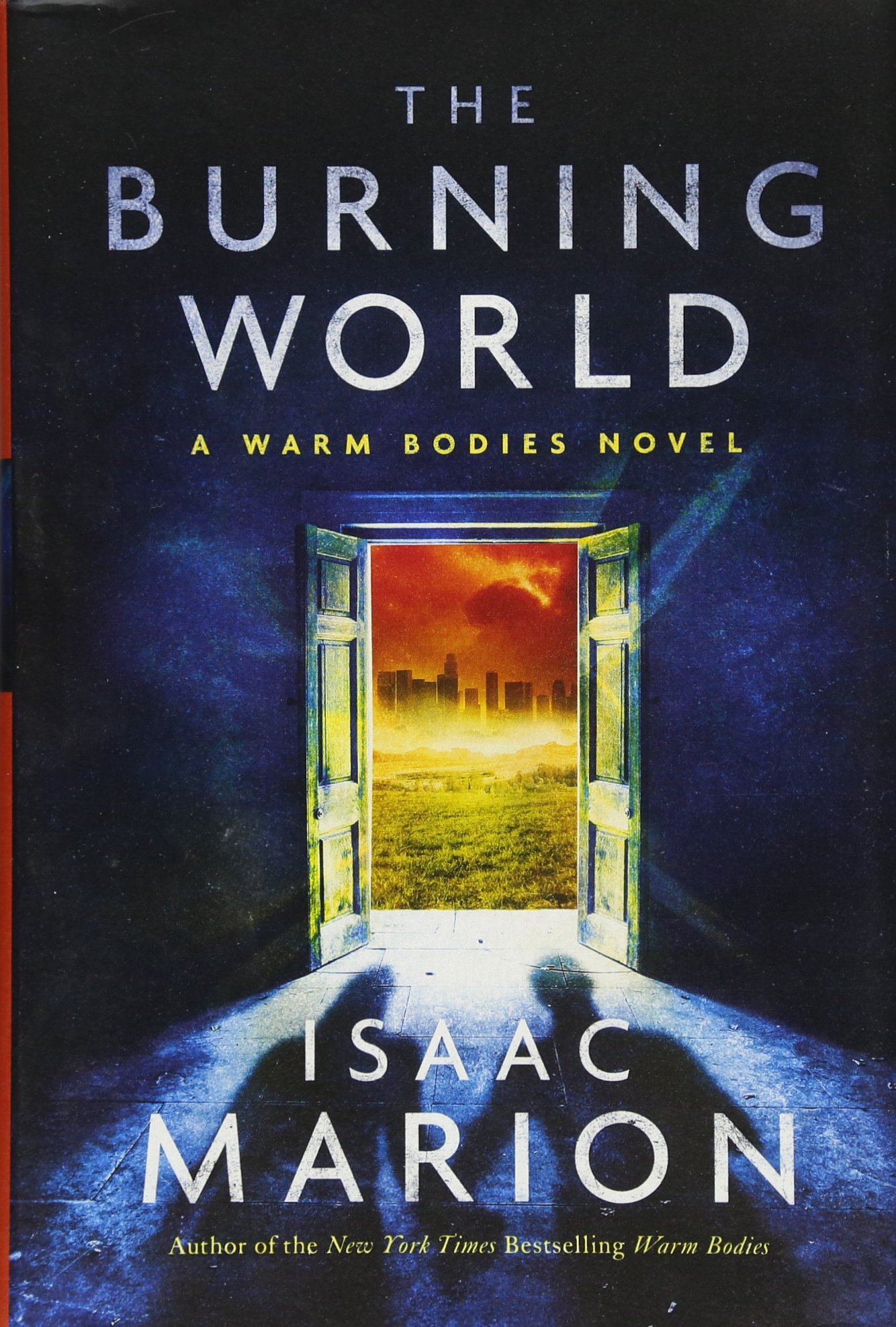
Review of The Burning World by Isaac Marion
A few years ago, when I first heard the premise of Isaac Marion's novel Warm Bodies--a zombie boy falls in love with a living girl--I was at least stopped by the idea enough to see that a lot of people were talking about how good this novel was. So I read it and loved it. In addition to being a unique take on the zombie apocalypse, I was even more impressed to learn that it was a bit of an unusual retelling of Shakespeare's tragic play, Romeo and Juliet. Through Warm Bodies, the reader gets to take a journey through the mind of a not-so-mindless zombie as he struggles with a past he doesn't remember and a strange desire to protect a girl named Julie that he should want to devour. Warm Bodies ended with R, the zombie protagonist who can't remember what his name was before the apocalypse, rediscovering his humanity and finding life again. Then the story ends.
Except it was only a beginning. R and Julie showed that being a zombie could be reversed. The Dead could become the Living again.
But in The Burning World, Isaac Marion's follow-up to Warm Bodies, is a much more dangerous place than we realize, and not just because of zombies. If the previous novel ended on a note of hope that things could get better in the world, this new novel demonstrates that things won't get better without a significant fight.
As the book opens on R and Julie trying to create a life together, R is trying to remember how to be a human. Though he's headed in the right direction, he hasn't quite made it yet, and he still has much to learn. The memory of who he once was is still a mystery, but it's one he doesn't care to unravel anyway because he only wants to focus on the future with Julie. Their chance at happiness is soon interrupted when a militia group called Axiom comes to take over their home in Citi Stadium. Axiom's idea of rebuilding society doesn't include the zombies that are now reforming, nor human freedom. As everything R and Julie have begun fighting for becomes threatened, the two find themselves on the run across the country with two of their friends and an unlikely ally, a man named Abram Kelvin, who wants nothing more than to disappear off the grid with his daughter, if only Axiom will let him.
Perhaps the most gripping part of this novel is the way R gradually remembers who is and how he copes with the kind of person he's discovering he was. The mystery of R's identity is reason enough to keep turning pages, but Marion also delivers fast-paced action and surprisingly deep philosophical reflection on what it means to be human.
I don't really have any criticisms of the book. I will say that I wasn't as interested in reading it as I was the first book because I didn't imagine the story could get better after Warm Bodies. I was glad to see that I was wrong.
The Warm Bodies series is a unique take on the zombie apocalypse genre that has become so popular in recent years, and so far, this one gets better with each book. I look forward to diving into the finale called The Living next.
Except it was only a beginning. R and Julie showed that being a zombie could be reversed. The Dead could become the Living again.
But in The Burning World, Isaac Marion's follow-up to Warm Bodies, is a much more dangerous place than we realize, and not just because of zombies. If the previous novel ended on a note of hope that things could get better in the world, this new novel demonstrates that things won't get better without a significant fight.
As the book opens on R and Julie trying to create a life together, R is trying to remember how to be a human. Though he's headed in the right direction, he hasn't quite made it yet, and he still has much to learn. The memory of who he once was is still a mystery, but it's one he doesn't care to unravel anyway because he only wants to focus on the future with Julie. Their chance at happiness is soon interrupted when a militia group called Axiom comes to take over their home in Citi Stadium. Axiom's idea of rebuilding society doesn't include the zombies that are now reforming, nor human freedom. As everything R and Julie have begun fighting for becomes threatened, the two find themselves on the run across the country with two of their friends and an unlikely ally, a man named Abram Kelvin, who wants nothing more than to disappear off the grid with his daughter, if only Axiom will let him.
Perhaps the most gripping part of this novel is the way R gradually remembers who is and how he copes with the kind of person he's discovering he was. The mystery of R's identity is reason enough to keep turning pages, but Marion also delivers fast-paced action and surprisingly deep philosophical reflection on what it means to be human.
I don't really have any criticisms of the book. I will say that I wasn't as interested in reading it as I was the first book because I didn't imagine the story could get better after Warm Bodies. I was glad to see that I was wrong.
The Warm Bodies series is a unique take on the zombie apocalypse genre that has become so popular in recent years, and so far, this one gets better with each book. I look forward to diving into the finale called The Living next.
Monday, May 28, 2018
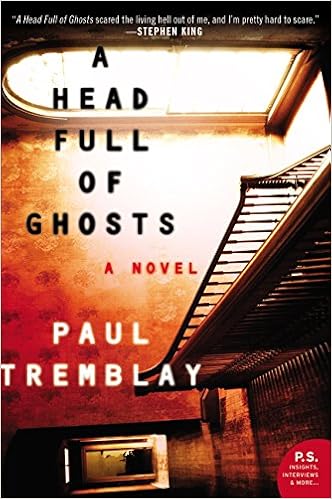
Review of A Head Full of Ghosts by Paul Tremblay
I've always been a fan of really good demon possession stories, probably ever since seeing The Exorcist as a young child. There's something about the confrontation of genuine undeniable evil in these stories that gives me hope that evil can be faced and defeated.
I picked up Paul Tremblay's A Head Full of Ghosts because it's about a young woman and her family, who are portrayed in a reality television show as the family struggles with the young woman's demon possession. The story is told from the present day by the possessed girl's sister Merry, now an adult, as she relates what happened in her house from her perspective when she was a little girl.
The point-of-view of young Merry as she recounts the story reminded me of my own daughter, and that added to the terror of the story. Merry is close to her sister, but she doesn't understand what is happening to her as she begins acting strangely, playing terrible tricks on her, and freaking out her parents. There's a sense of foreboding throughout the novel as you wonder what exactly happened to Merry's family. What happened to Marjorie? Was she really possessed? Was she healed? Did things get better?
This was a great story from beginning to end, and I'm interested in reading anything else Paul Tremblay has written as a result.
I picked up Paul Tremblay's A Head Full of Ghosts because it's about a young woman and her family, who are portrayed in a reality television show as the family struggles with the young woman's demon possession. The story is told from the present day by the possessed girl's sister Merry, now an adult, as she relates what happened in her house from her perspective when she was a little girl.
The point-of-view of young Merry as she recounts the story reminded me of my own daughter, and that added to the terror of the story. Merry is close to her sister, but she doesn't understand what is happening to her as she begins acting strangely, playing terrible tricks on her, and freaking out her parents. There's a sense of foreboding throughout the novel as you wonder what exactly happened to Merry's family. What happened to Marjorie? Was she really possessed? Was she healed? Did things get better?
This was a great story from beginning to end, and I'm interested in reading anything else Paul Tremblay has written as a result.
Monday, June 5, 2017
Reading What is the Bible? by Rob Bell
I'm reading Rob Bell's new book about the Bible, aptly titled What is the Bible? I've been a fan of Rob's ever since his Nooma video days. Of course, Rob has become famous in recent years for questioning many of the things orthodox Christians believe. The firestorm began with the release of his book Love Wins, which challenged many of the teachings the church has about hell.
I don't agree with everything that Rob says, but I do think he has a lot of important things to say and gets people thinking creatively. With that said, I'm really enjoying the book so far. Most orthodox Christians would probably shy away from the book simply because it's written by Rob Bell, but I think it's worth a read from what I've read so far. He says some enlightening things and some questionable things.
Most importantly, however, he gets people thinking about the Bible and the God it points to. I'm looking forward to writing a more detailed review of the book when I finish.
I don't agree with everything that Rob says, but I do think he has a lot of important things to say and gets people thinking creatively. With that said, I'm really enjoying the book so far. Most orthodox Christians would probably shy away from the book simply because it's written by Rob Bell, but I think it's worth a read from what I've read so far. He says some enlightening things and some questionable things.
Most importantly, however, he gets people thinking about the Bible and the God it points to. I'm looking forward to writing a more detailed review of the book when I finish.
Monday, May 29, 2017
A Bittersweet End of the School Year
The end of every school year is bittersweet. Of course, summer vacation is exciting. But there's something about saying goodbye to these students that I've spent more days with than not over the past nine months, especially when so many of them come to say goodbye and offer their kind words on the last day when they don't have to.
Every year, I think to myself that this is the class that I'll never forget. Then this year's freshman class walked in, and now they also are the ones I will never forget and that has made the most impact on me. I'd gladly teach them another year if I could. I am truly blessed to have a job I never dread going to each day.
Tuesday, May 23, 2017
Review of Walking on Water by Madeleine L'Engle
I'd heard of Madeleine L'Engle's Walking on Water many times but never read it until recently. In fact, it's the first book of L'Engle's that I've read, and it makes me want to read more books by her. L'Engle was a storyteller who also happened to be a Christian. Being an artist and being a Christian seems to come with certain struggles. There's the question of whether or not the things we create are created for the primary purpose of trying to evangelize. What if something we create doesn't lead someone to become a follower of Jesus? What then?
What I loved about L'Engle's book was her assertion that we created by the Creator to be creative, and to be creative is reason enough to create something new. The stories we write don't have to be "Christian" in nature because Christian was never meant to be an adjective. L'Engle encourages artists who are Christians to be who they are but to create art that is true to who they are. The stories we tell should reflect our worldview, but they shouldn't be just to lead people to Jesus. L'Engle charges that art created solely for the purpose of evangelism often feels forced and just isn't organic. We do our art and the people who might enjoy it a service if we don't create something that is true and organic to who we are.
Walking on Water is a fantastic journey through L'Engle's own experiences as an artist who is also a Christian. I'd recommend it to creators of all types.
Review copy provided by Blogging for Books
What I loved about L'Engle's book was her assertion that we created by the Creator to be creative, and to be creative is reason enough to create something new. The stories we write don't have to be "Christian" in nature because Christian was never meant to be an adjective. L'Engle encourages artists who are Christians to be who they are but to create art that is true to who they are. The stories we tell should reflect our worldview, but they shouldn't be just to lead people to Jesus. L'Engle charges that art created solely for the purpose of evangelism often feels forced and just isn't organic. We do our art and the people who might enjoy it a service if we don't create something that is true and organic to who we are.
Walking on Water is a fantastic journey through L'Engle's own experiences as an artist who is also a Christian. I'd recommend it to creators of all types.
Review copy provided by Blogging for Books
Sunday, October 9, 2016
Review of Finding God in the Waves by Mike McHargue
I grew up assuming God existed because that was what my parents and my church told me. I never questioned their credibility. I just believed they were telling the truth and evidence wasn't required. I became a follower of Jesus when I was fifteen, and all was well. Except the older I got, the more questions I had. Certain things about the Bible didn't make sense. I also had a fascination with science, which often comes into conflict with religion and faith. In college, I decided the evidence for God's existence was weak and turned away from my earlier belief. It was scientific evidence that led me back to a belief that God must be behind the universe we live in.
My story is exactly why I couldn't wait to read Mike McHargue's book Finding God in the Waves. I still have questions, many years later, and Mike's story is similar to my own. When I picked up the book, I almost skipped to the second part, bypassing Mike's personal story. Not that I thought it would be boring, I just wanted to get to the evidence part. Thankfully, I decided to read Mike's story first, which resonated with my own experience on almost every page. It's a powerful story of losing God and not so much finding him again but being found by him instead.
Then in the second part, Mike outlines the evidence for why we should believe. He covers God's role in creation, how neuroscience points us to God, and why we can trust that Jesus is who he says he is. Some things can't be easily explained by science, but so much can, and so much of it points to God.
Finding God in the Waves may not convince everyone, nor is it supposed to, but for many, Mike's story is a welcome one because of its honesty with the experience many of us share.
Review copy provided by Blogging for Books
Subscribe to:
Posts (Atom)