Wednesday, May 22, 2013

Review of THE GOD-SHAPED BRAIN by Timothy R. Jennings

In THE GOD-SHAPED BRAIN author Timothy R. Jennings presents evidence that reveals how a person perceives God affects their brain in either constructive or destructive ways. Specifically, he looks at the effects of two models of how God is often perceived. Jennings presents a fear-based God who is constantly waiting for people to fail in order to punish them in his anger, and he rightly shows that viewing God this way is destructive to the part of the brain where our rational decision-making capabilities reside. On the other end of the spectrum, Jennings presents a God of love. This God loves people and wants to heal them from their destructive sinful nature. This God is never angry at people for the things they do because he understands that their sinful nature is beyond their control and he just wants to love them and help them. This perception of God helps the part of the brain where our decision-making capabilities reside. Jennings describes how the brain works, drawing on some incredible findings in the field of neuroscience. The brain’s plasticity and ability to be rewired by our behaviors is outstanding and a testament to God’s incredible creativity in designing the human brain. Jennings seeks to help people to have an accurate perception of God and shows how this rewires our brains for good.

I got really excited when I read the description of this book, so I wanted to read it as soon I could. By the end of the book, however, I was greatly disappointed. To be sure, Jennings presents a lot of helpful insights and his heart is clearly in helping people to get better. But the book seems to try to paint a God more in the image of the one in Jennings’ imagination than the one the Bible describes. Jennings shows that fear hurts the brain. It makes sense. And it would be easy to draw the conclusion that God wouldn’t do things that intentionally cause fear because he doesn’t want to harm our brains since he designed them to respond in that way. I get it. However, the Bible presents us with a God who is very often fear-inducing. Jacob in the Bible even once refers to God as the “Fear of Isaac.” The Bible says that the fear of the Lord is the beginning of wisdom. Sure, we’re told time and again not to fear, but that is because if we trust in God he is for us. If we make God our enemy, we have much to fear.

Jennings resorts to reinterpreting countless passages of Scripture to say what he believes they say. For example, he repeatedly tries to explain away God’s anger by looking at passages where God says he’s angry and trying to show us why that doesn’t mean what we think it means. I think he’s right in some areas about the actions of God in anger because I don’t believe God is a divine thrower of temper tantrums. But I think if God says he’s angry, I think he means that he’s angry. Who are we to try to explain that away as if we think we’re God’s public relations agent?

Jennings wants to show that God doesn’t produce fear, but story after story in the Bible shows us a God who does things that produce fear in human beings. He tries to explain this away as well as God being so loving that he’s willing to be misunderstood. But according to Jenning’s research, God being misunderstood is very damaging to the brain.

Finally, because the traditional view of hell doesn’t fit the perception of God that Jennings is trying to present, he opts for a view of hell that’s as unclear as Rob Bell’s. He seems to be advocating a form of annihilationism, but it seems that he could possibly be supporting a form of universalism in which everyone’s sinful nature is eventually burned away. I wish I could believe in annihilationism, but the biblical evidence doesn’t seem to support it, and the biblical witness certainly leaves out the option of universalism.

I think Jennings is right to want to obliterate the view of God as an angry tyrannical hateful ruler of the universe because I believe God is ultimately loving. I also believe that God is misunderstood and that we have to use our minds to understand what he is saying to us. How do you explain the effects of fear on the brain? I’m not a scientist, so I can’t say, but I think there’s probably a lot more going on than scientists have currently discovered about the human brain. I support the heart behind THE GOD-SHAPED BRAIN, but I can’t support all of the theological conclusions of it. Being a book review, I can’t adequately wrestle with every issue in the book. That would require a book in itself. But readers should read with a critical mind.

Review copy provided by InterVarsity Press

Photo Credit: InterVarsity Press

Friday, May 17, 2013

Review of WHY CITIES MATTER by Justin Buzzard and Stephen Um

WHY CITIES MATTER by Justin Buzzard and Stephen Um is an insightful, thought-provoking, and stirring book about the role of cities in God’s creation. Buzzard and Um are both pastors in major cities, so they speak as practicitioners and, as you’ll come to see throughout the book, men who love the cities and people they serve. The authors look at cities, what they are, why people flock to them, and what vital role they play in the world we live in. Then they look specifically at the role of the city in God’s redemptive plan for the world, and this part is incredibly enlightening.

I hadn’t thought much about cities before reading this book, but this book opened my eyes to the way culture is shaped both in and by cities which are made up of people. Cities present incredible opportunities for redemptive purposes, and the authors show how to contextualize the gospel in the midst of the city.

WHY CITIES MATTER is an important book, and I found it to also be a very exciting book. The authors paint an incredible picture of what God is doing through people gathered in cities, and it will likely make you want to be a part of what God is doing.

Review copy provided by Crossway Books

Photo Credit: Crossway Books

Thursday, May 9, 2013

Review of REWRITE, Second Edition by Paul Chitlik

Second Edition Coming November 2013

REWRITE by Paul Chitlik is a step-by-step guide for screenwriters to take the first draft of their screenplay and greatly improve it. Chitlik states that screenplays often go through several rewrites before a final draft is achieved. He gives some very practical tips on how to make this process effective.

Chitlik covers two types of story structure and what types of stories they fit best - 3-act structure and the mythic structure often associated with Joseph Campbell. He then outlines how to develop your story's characters. I loved the chapter on the emotional relationship in the story. There's a chapter on effectively eliminating pages from your script to tighten the story without losing any of the most vital parts. Each chapter has assignments for you to work on as you're reading so that ideally you're completing a rewrite of a script in the course of reading the book. There are ample examples from well-known movies throughout go illustrate Chitlik's points.

REWRITE is invaluable resource for writers to tighten their scripts and make them better.

Review copy provided by Michael Wiese Productions

Photo Credit: Michael Wiese Productions

Wednesday, May 8, 2013

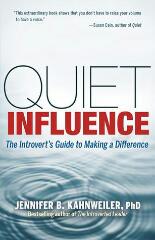
Review: QUIET INFLUENCE by Jennifer Kahnweiler


I’ve always been an introvert, and I’ve always been aware of it. It’s been a frustration because as an introvert I find it hard to be influential, and yet I have this driving need inside of me to do something that impacts people. On top of that, I’m raising a little girl who is also an introvert, and I want to help her avoid some of the frustrations I grew up with. It seems like in the last few years that the world has been realizing the presence and potential of people with introverted personalities. Susan Cain’s book Quiet: The Power of Introverts in a World that Can’t Stop Talking was a powerful book and easily my favorite of 2012. Jennifer Kahnweiler, an extrovert ironically, has contributed some important insights on the inherent influential strengths of introverts and how to hone them and use them to be influential without trying to be someone else. Her new book is QUIET INFLUENCE. Kahnweiler identifies the influential strengths of introverts as:
 
Taking Quiet Time
Preparation
Engaged Listening
Focused Conversations
Writing
Thoughtful Use of Social Media
 
She devotes a chapter to each one, but also does a great job of describing how the strengths work together. There’s an opportunity to measure the level of each of your strengths, and there are practical steps to take to help strengthen the ones that aren’t as strong as they should be. Each chapter has some helpful stories that illustrate introverts in influential action. As an introvert, I wouldn’t say that I was unaware of these six strengths, but I do believe the book to be helpful in encouraging introverts to be who they are and not feel the pressure to be an extrovert. QUIET INFLUENCE should help introverts communicate effectively and influentially.

Review copy provided by Berrett-Koehler Publishers

Photo Credit: Berrett-Koehler Publishers

Review: CONTAGIOUS by Jonah Berger

If you want to be a communicator of ideas that spread widely and quickly, there's no better book that I can think of to help you package your ideas for sharing than the aptly titled CONTAGIOUS by Jonah Berger. Berger is a marketing professor at The Wharton School at the University of Pennsylvania. Using a lot of research about the spread of ideas, Berger uncovers six characteristics that are likely to contribute to an idea's spreadability. They are:

Social Currency
Triggers
Emotion
Public
Practical Value
Stories

Berger shares stories throughout the book that serve to validate the ideas he presents for contagious content. An idea or product doesn't have to have all the characteristics to be contagious, but the more it has, the more contagious it is likely to be.

Some of the stories in the beginning were really surprising about the decisions people make and why. You'll likely run into many concepts that seem counterintuitive, but the book definitely helps to understand how to tap into human nature to make ideas more contagious.

I think CONTAGIOUS could be a very contagious resource for communicators and marketers. It was definitely a book I learned much from and enjoyed reading as well.

Review copy provided by Simon and Schuster

Photo Credit: Simon and Schuster

Tuesday, May 7, 2013

Review: A CAST OF STONES by Patrick Carr

Errol Stone is a drunk. Chased constantly by a tragic past, Errol lives each day to drown out his memories with ale. No one would ever suspect he would ever be someone important, but that’s all about to change. The kingdom he lives in is in trouble. The king is near death, and he has no heir. The implications of the king dying without someone to take his place are dire, threatening to unleash an ancient evil that will destroy everything. But there are some who have a plan. The new king will be chosen by a religious group known as the readers. The readers cast lots to tell the future, and they will reveal the kingdom’s new leader. But something mysterious is trying to stop them at all costs. When Errol discovers that he himself is a reader, it puts him on a path that will change him and the kingdom. Who will he become?

I decided to pick up A CAST OF STONES by Patrick Carr because it looked like an interesting fantasy novel from a Christian perspective. I didn’t know what to expect, but as I read, I grew to love this story. Errol’s character undergoes an incredible transformation throughout the story that really made this into a hero’s journey. The story is filled with action, as well as many suspenseful moments that kept me turning pages to find out what will happen next.

The stakes in this novel are great, and Carr does this brilliantly as he reveals his back story through dialogue as the story goes along. The descriptions helped me to imagine the world the story takes place in and the characters and creatures within it.

A CAST OF STONES is the first book in a trilogy, and as a story on its own, it is a brilliant redemptive story. But also as the first book in a trilogy, I’m left wanting more. I have a feeling this story is going to get better and better, and Patrick Carr will be an author I look forward to from now on.

Review copy provided by Bethany House Publishers

Photo Credit: Bethany House

Wednesday, May 1, 2013

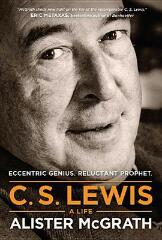
Review: C.S. LEWIS: A LIFE by Alister McGrath

If I were to write that C.S. Lewis is one of my favorite authors and that his writings have shaped my thinking about God and the nature of the world we live in, I wouldn't be saying anything that countless others haven't already said. But how did C.S. Lewis become so popular? How did he become a voice that speaks into the lives of so many people about the Christian faith for so many years after his death? This year marks the 50th anniversary of the death of C.S. Lewis, and Alister McGrath has given us a compelling narrative and rare look into the life of Lewis in C.S. LEWIS: A LIFE. 

My first introduction to C.S. Lewis was in college when I was required to read The Lion, the Witch, and the Wardrobe for a class I was taking. I enjoyed the story, but it would be a few more years before I really grew to appreciate the story and the series as a whole. Lewis became a favorite of mine when I decided to pick up Mere Christianity a few years ago. I love to think, and Lewis got me to thinking. The book made so much sense of so many things that I felt like I wanted to say myself. As I continued to read more and more of Lewis’ works, I always felt like I was reading the works of someone who understood the way my mind worked. I was intrigued when I heard that Lewis came to faith as a result of a conversation with J.R.R. Tolkien. All of this combined to make Lewis a compelling figure in my mind. Where did all this come from? 

That’s where McGrath’s book comes in. McGrath takes us on a journey from Lewis’ early beginnings in Ireland, through his development as an Oxford scholar, to his embracing of theism and then Christianity, to his rise as an apologist and author of popular works, to his complicated relationship with Joy Davidman, and finally to his death. Throughout, McGrath carefully intersperses where Lewis’ major works fall into the timeline of his life, including the possible driving forces and the implications of each. The book almost reads like a novel, revealing the hinge moments in the life of Lewis that shaped him into the man who would write such great Christian works, such as The Screwtape Letters, The Problem of Pain, and The Ransom Trilogy. 

One of the aspects of the book that I loved was the period of time focused on Lewis’ career at Oxford. I always knew that Lewis taught at Oxford, but McGrath’s book shows how foundational this was to Lewis’ life and thought. I also loved reading about Lewis’ relationship with Tolkien and his part in the success of Tolkien’s most famous work, The Lord of the Rings. I was left saddened however by the turn in Lewis’ and Tolkien’s relationship in the end.

McGrath’s book cleared up so much that I didn’t know or realize about Joy Davidman and Lewis’ complicated relationship with her. Joy Davidman was an interesting character in Lewis’ life, and I didn’t realize the impact she would have on him and the motivations that drove her in the beginning. I loved McGrath’s comparison between the similarities, yet different perspectives, of The Problem of Pain and A Grief of Observed.

McGrath clearly did an extensive amount of research to write this book, reading everything that Lewis had written, including all of his surviving letters, in chronological order. McGrath compiled a history of Lewis’ life based on all the evidence he could find, and one of the interesting aspects of the book is his critical look at the dating of Lewis’ conversion, challenging Lewis’ own dating for it. I have to say it seemed convincing. 

C.S. LEWIS: A LIFE is without question the best book I’ve read so far this year, driving me to want to go back and read Lewis’ works, including the ones I haven’t read. If you read this book, I think you’ll be pulled that way as well. Throughout the narrative, we meet so many people who impacted Lewis’ life: his father, his brother Warnie, the mother of a childhood friend Mrs. Moore, Owen Barfield, Arthur Greeves, Tokien, Davidman, and so many others. Therefore, if I had to some up the impression that I came away with from the book, I would have to say McGrath’s book is about the relationships in Lewis’ life and how they shaped him for better or worse. I can’t recommend McGrath’s biography of C.S. Lewis enough.

Review copy provided by Tyndale House Publishers


Photo Credit: Tyndale House