Tuesday, March 11, 2014

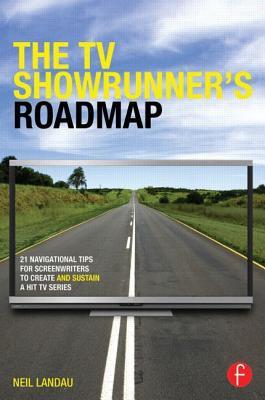
Review of The TV Showrunner's Roadmap by Neil Landau

Title: The TV Showrunner's Roadmap
 
Author: Neil Landau
 
Publisher: Focal Press
 
What It's About: The TV Showrunner's Roadmap looks at the world of the TV showrunner, giving tips for writers who want to break into television on how to create a compelling TV series.
 
Why I Read It: I love the storytelling model of series television. Smallville, LOST, Once Upon a Time, The Black List, Supernatural, The Walking Dead, and the list goes on. While I love movies, I tend to think that television storytelling is uniquely compelling in the way that TV writers create and sustain multiple storylines that converge into one overarching narrative of their shows. I loved Neil Landau's previous book on screenwriting The Screenwriter's Roadmap, and I was excited to read this one as well.
 
What I Liked About It: The tips are great and they'll definitely help stimulate your creativity to create great show ideas and begin fleshing them out. What I loved about this book, however, were the interviews with television showrunners. This book provides a rare opportunity to learn from the creative minds behind some of the best series on television. I loved the interview with Damon Lindelof (co-creator of LOST), the interview with Adam Horowitz and Edward Kitsis (creators of Once Upon a Time), and even though I gave up on the show in the third season, I enjoyed the interview with Breaking Bad Vince Gilligan.

There a lot of other great interviews that any writer will learn much from. The value of this book is that it gets you thinking about your story and gives you some very practical tips on how to shape your story to be the best it can be. There are great chapters on creating a show mythology, which is what I loved about both LOST and Smallville. There are also chapters on theme, story structure, setups and payoffs, and much more. This is a great book for any screenwriter who wants an insider's look at what makes television storytelling work so well.

Review copy provided by Focal Press
 
Where You Can Buy It: Amazon.com

Friday, March 7, 2014

Flash Fiction Friday: Who Killed Sara?

This is a fun murder mystery story I wrote for my high school English class to get them interested in looking for evidence to support their answers to open-ended responses.

Who Killed Sara?
A girl named Sara was walking home from work one evening. Her apartment wasn't far, but she was always uneasy about walking because it was just getting dark and she had to pass by Old Man Grady's house. Old Man Grady was a creepy man who lived in an even creepier house. Every evening when she walked home, the old man would stare at her from the front window of his house. There were rumors that Old Man Grady once had a family, but that he murdered them. Some people said that his wife and kids were buried in his backyard. 


On this particular night, Sara was thinking about the argument she had with her boyfriend Steve earlier in the day. She had kissed his best friend Darrell, and Steve found out. She knew it was stupid, but her relationship with Steve wasn't going so great lately. When Steve found out, he'd lost it. She was scared that he was going to hit her, but he stopped himself. Unfortunately, even if he had hit her, it wouldn't have been the first time. Before storming out of her apartment, Steve had told her she was going to pay for what she'd done.

She hated the way he made her feel. Why couldn’t he just love and treat her right? She hated the way everyone made her feel. She thought about how many times she could count on one hand that her mom called just to talk to her. She was walking home from a job she hated to an apartment that she could barely afford. Surely, life was meant to feel more fulfilling than this.

When Sara walked by Old Man Grady's house, she noticed that he wasn't in his usual place. She thought it was odd because he was always there. As she continued walking home, she felt like she was being followed. She looked back, but it was so dark that she couldn't see anything. She kept walking, but a little faster than she had been.

When Sara reached her apartment, she looked behind her one more time. No one was there that she could see. She stepped into her apartment and closed the door.

Local police found Sara dead in her apartment the next morning.

Who do you think killed Sara and why? 

photo credit: Ajnagraphy photopin cc

Wednesday, March 5, 2014

When Salvaging the Past Can Get in the Way of Cultivating the Future


In a really good story, the main character goes on a journey to find something that he desperately needs. Often the thing he desperately needs most is a personal character change. The liar becomes honest. The alcoholic becomes sober. The deadbeat dad becomes the loving father his children need. The distant husband becomes the relentless pursuer of his wife’s heart. The guy who was lazy becomes the most industrious fella around.

Storytelling works because it mirrors what is supposed to be true about reality. Human beings find in themselves a need to change. We aren’t perfect. We have flaws. We need to be more than we are today. And the journey doesn’t end as long as we’re alive.

But what happens when the story stops? Not because of a sudden death, but because the journey became more about repairing the past than moving into the future. You see, we’re meant to change. It’s good for us, and our story is better when we do. But when it comes to living, we can take one of two postures, and which one we take determines our future.

We can spend our lives salvaging the past or cultivating the future.

And that’s the problem. Too many times I catch myself picking up the pieces of my last mistake because I just keep making the mistakes instead of moving forward. Opportunities pass by because I wasn’t ready. How could I be? I was in salvaging mode.

In salvaging mode, you never really feel like you’re making any traction, and you never really feel like you can get ahead because you’re relentlessly behind, picking up the pieces of the choices you continue to make.

At some point, you have to wake up and realize that opportunities are passing you by because you’re in salvaging mode. Salvaging sounds good, but salvaging only makes the most of the past to make the best of the present. Cultivating learns from the past and builds from it into the present with a constant view of the future.

Salvaging brings you to today. Cultivating brings you to tomorrow and beyond.

That’s the great thing about a story. It’s what we resonate with. All the best stories are stories of characters who start out normal, descend into salvaging mode, and through the journey discover a life of cultivating a better future.
That’s the kind of story I want to design.

Question: Do you find yourself living more in salvaging mode or cultivating mode?


photo credit: paul bica via photopin cc

Tuesday, March 4, 2014

Review of FUTUREVILLE by Skye Jethani

Title: Futureville

Author: Skye Jethani

Publisher: Thomas Nelson

What It's About: Futureville is a groundbreaking book that challenges the way Christians view the future and the world in which they habit. The premise of the book is that what we believe about the future largely determines how we live in the world and what we perceive to be valuable.

Why I Read It: I discovered Skye Jethani a couple years ago when I picked up a copy of his book With, and I was floored by it. Jethani's insight into culture and the vision of life presented in the Bible make him an important voice to listen to when it comes to Christian living.

What I Like About It: Everything. Seriously. Ask my wife. For weeks I talked on and on about this book. Jethani uncovers many misconceptions that Christians often carry and many of them that I didn't even realize that I carried myself until I read this book. It's not that Futureville itself is life-changing; it's the message of Jesus that Jethani presents from the Bible is truly life-giving and life-changing.

Jethani invites the reader on a journey to the future that God has imagined for us and outlined for us in the Bible. He calls this destination Futureville, and the origin of the term is an interesting story. He outlines how many Christians have viewed the journey to Futureville and what it looks like. Some people take an evolutionary approach to Futureville, which makes callings of social justice the most nobel for anyone to follow. Futureville arrives as we relentlessly pursue making this world a better place. Others take an evacuation approach to Futureville, which makes callings in which people spread the gospel the most nobel to pursue. This view sees the world as a sinking ship and we have to rescue as many people off of it as possible before it finally sinks. Forget social justice because evangelism is what's most important.

After presenting these two views, showing their implications, and ultimately where they fail, Jethani presents a truly beautiful vision of the future as God has envisioned it. This is Futureville, and it is based entirely in God's redemptive work. The book was really good up to this point, and it only gets better as Jethani presents a biblical theology of vocation. God is redeeming creation and he wants us to pursue callings that make the future kingdom a present reality wherever we can in the world now. That means evangelism is vitally important, but it's not the only nobel calling. Certainly, we can't neglect it. But there are also artists, those who create order in our world, and those who produce abundance.

In Futureville, there's a place for everyone, and God desires to use us to paint a picture of a redemptive future in the here and now. I was blown away by the poingancy of this book. Jethani reminded me how truly beautiful Christianity and the message of Jesus really is. I can't recommend this book enough to anyone who will read it. Like me, I think if it does what it's designed to do, you'll be going back to the Bible and seeing God's hope for the world in a fresh way, and that vision will change everything.

Review copy provided by Thomas Nelson through Book Look Bloggers

Where You Can Buy It: Amazon.com

Review of THE INMATES ARE RUNNING THE ASYLUM by Stephen Altrogge

Title: The Inmates Are Running the Asylum: Thoughts on Following Jesus, Amish Romance, the Daniel Plan, the Tebow Effect, and the Odds of Finding Your Soul Mate
Author: Stephen Altrogge

Publisher: Blazing Center Books

What It’s About: The Inmates Are Running the Asylum is a humorously serious look at the world through a Christian lens. The book looks at parenting, the confusing popularity of Amish Christian romance novels, and the ways Christians latch onto Christian sports stars, among many other equally funny topics.

Why I Read It: I’ve been following Stephen Altrogge’s blog for sometime because I enjoy the humor in his approach to writing. When he announced he was looking for reviewers for his new book, I signed up quick.

What I Enjoyed About It: The book is hilarious. I loved the first essay on Christian parenting books, and if you’re a parent, you’ll likely be dying laughing because of how true what he describes is. He tries his hand at Amish romance later on in the book with even more humorous effect. If Amish romance fiction read as comically as Altrogge’s example here, I could understand why people would read it. The chapter on Contemporary Christian Music was like reading a depiction of my own discovery of Christian music and subsequent dissatisfaction with the quality of it. Though, I will say bands like Red and Thousand Foot Krutch are really good. The rest of the essays are equally funny. If you enjoy humorous but friendly stabs at some of the often ridiculous things that people who are Christians sometimes do, this is a great book. It’s a quick read, and you’ll be laughing throughout it.


Review copy provided by the author

Where You Can Buy It: Amazon.com

Monday, March 3, 2014

Review of PLAYING GOD by Andy Crouch

Title: Playing God
 
Author: Andy Crouch
 
Publisher: InterVarsity Press
 
What It's About: Playing God is an exploration of what power looks like in the life of a Christian. People have certain preconceptions when they hear the word power. Crouch reframes the idea of power from a uniquely biblical perspective and shows power as something to be stewarded by believers.
 
Why I Read It: I'm familiar with Crouch's previous book on culture, and I was interested in the concept of this book.
 
What I Liked About It: Crouch's book reframes power as something that Christians use to make the world a better place. It's about stewarding God's gift to promote human flourishing. He shows how power can be abused and used for bad, but power is something everyone has, and it's important to learn how to use it for good. Crouch's book looks at the use of power from an individual perspective and the perspective of human institutions. Playing God is a helpful look at how to use power and influence in order to make the world a truly better place.

Review copy provided by InterVarsity Press
 
Where You Can Buy It: Amazon.com

Saturday, March 1, 2014

Weekly Intake - March 1, 2014

Here's some things I enjoyed reading on the web this week:

Noah Facts #1: Sunday School Was Wrong! - Brian Godawa
Hollywood has a movie based on the biblical story of Noah's ark coming out, and many Christians are worried about he creative license the filmmakers will take to tell their story. Will convey any of the real biblical meaning behind the story? I've been following Brian Godawa for sometime because he's a creative storyteller and he has an incredible grasp of the role of faith in filmmaking and storytelling. He has a lot of interesting things to say both about the story of Noah in the Bible and the movie coming out in this article.

The Bermuda Triangle of Storytelling - Larry Brooks at StoryFix
I've read and re-read Story Engineering by Larry Brooks because it oultines a really helpful process for crafting a story, whether in novel form or a screenplay. In this article, he insightfully differentiates between idea, concept, and premise. Definitely a helpful and practical way of looking at getting from idea to premise to complete story.

Leaders Eat Last: A Conversation Between Todd Henry and Simon Sinek - Andy Mort
I've been slowly making my way through Simon Sinek's great new book Leaders Eat Last. Sinek has been one of the most helpful voices in the area of planning and finding meaning in the things that I do with his last book Start With Why. He recently had a conversation with author Todd Henry on Henry's Accidental Creative podcast. In this post, musician and writer Andy Mort shares the notes he took while listening to the conversation. It's a great conversation.