Wednesday, December 14, 2022

Save the Cat Beat Sheet Workbook Review


I read Blake Snyder's Save the Cat: The Last Book on Screenwriting You'll Ever Need a few years ago because I was just getting back into screenwriting after having had an interest in it when I was younger, and it seemed like that was one of the primary books that was recommended. It wasn't the only book I read on screenwriting at the time, but I did find it to be particularly user-friendly and understandable when it comes to story structure in a screenplay. Of course, the book hasn't been without its share of detractors claiming that it's formulaic and even that it destroyed Hollywood movies because so many screenwriters started adopting it. But rather than being formulaic, Snyder's structure acts as a fairly loose blueprint to help you craft a compelling story for the screen. It's more like a playground with wide boundaries for screenwriters to play in, giving a lot of freedom of choice within the framework. I've written two screenplays of my own, and for both, I outlined first using Blake Snyder's Beat Sheet from Save the Cat.

Though Save the Cat itself is a great book, many writers have had questions throughout the years on how to implement its concepts. The answer to that is Jamie Nash's new book Save the Cat Beat Sheet Workbook. This is honestly the Save the Cat book I've been waiting for. I've read every Save the Cat book since the original and have enjoyed how the authors have analyzed film and television using the STC method. But I have struggled at times with how to handle things like Snyder's "fun and games" beat and how to develop realistic characters.

Save the Cat Beat Sheet Workbook is a creativity-generating workbook like I've never come across. Jamie Nash helps you to dig into who you are as a writer before helping you to come up with not just one but many potential story ideas before getting you to focus on one. There's even an element of "Choose Your Own Adventure" to it in that you can choose the path of an Inside Out approach to planning your story or an Outside In approach. Either way, you'll learn how to develop a solid plot and a cast of characters to inhabit your story. 

The book is designed as a workbook for planning and writing one story, so for someone like me who struggles with writing in books and wanting to be able to use this more than once, I'm working through the pages in a separate notebook, but it's a highly valuable tool for generating ideas not only for stories but for scenes and characters as well.

Save the Cat Beat Sheet Workbook is the perfect companion to Blake Snyder's original Save the Cat.

Note: A copy of this book was provided by the publisher for review. The book can be purchased on Amazon (affiliate link).

Friday, July 16, 2021

Review of Oriental Mythology by Joseph Campbell


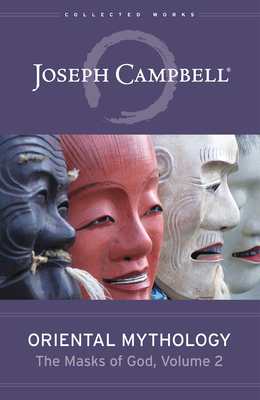
The works of Joseph Campbell have illuminated much about history, mythology, and religion for many, and continue to do so. Oriental Mythology is the second volume in Campbell's 4-volume The Mask of God series, and in it, Campbell explores ancient Asian history and mythological thought. For readers of a Western background, this book shines a light on ancient Asian cultures, how they were formed, and their continued influence on the modern world. 

While Campbell perhaps takes a biased view at times (toward Western cultural thought), the sheer volume of information contained in this book is a good place to start if you're interested in ancient Eastern stories and religion. With this new edition published by New World Library, much has been updated to reflect new discoveries since its original publication in 1962. 

It's a deeply detailed read and dry at times, but Joseph Campbell is the person to read if you want a detailed overview of how religion and mythology have evolved throughout and impacted world history.

Note: Review copy provided by the publisher.

Saturday, May 1, 2021

Save the Cat Writes for TV Book Review


I've been a fan of the Save the Cat screenwriting method ever since reading Blake Snyder's original Save the Cat book several years ago. Though many people claim that his method is formulaic, I've always found it to be a user-friendly tool to help me hone my story ideas into something coherent, and it's how I structured the first screenplay I ever wrote. Since reading Save the Cat, I've read every other addition to the Save the Cat series, including Save the Cat Writes a Novel, a helpful guide for applying Blake Snyder's ideas to writing a book instead of a screenplay.

In recent years, television series have become a powerful way of telling a longform story that is proving to stand in competition to full-length feature films. Marvel's WandaVision is one example, as well as the Star Wars television series The Mandalorian. Because episodic television allows you to dive deeper into a story world than a two-hour film, many writers are interested in writing for television.

Save the Cat Writes for TV is the latest edition of the Save the Cat series that focuses specifically on writing longform television series using Blake Snyder's beat sheet method to plot out both episodes, such as the all-important proof-of-concept pilot episode, and multi-episode story arcs and full television seasons. Save the Cat Writes for TV is Jamie Nash, a screenwriter and instructor who has used the methods he outlines in the book to create television stories. 

With plenty of examples, which is a characteristic of all he Save the Cat books, Nash shows how the Save the Cat method can be seen in some of the most recent successful television series. He also gives advice on how writers can pursue a career in television by using the method to prove they can write the kinds of stories viewers are looking for.

Save the Cat Writes for TV is another great addition to the Save the Cat methodology and worth diving into if you want to write for television.

Saturday, March 20, 2021

Review of The Memory Thief by Jodi Lynn Anderson


The Memory Thief is the beginning of a series of books called Thirteen Witches by Jodi Lynn Anderson. In it, twelve-year-old Rosie Oakes has lived her whole life wondering why her mother feels nothing for her. The spark that causes a mother to dote on her child is just missing from Rosie's mom, and no matter how desperately she longs for her mother to show just the slightest affection to her, Rosie has learned that she's on her own. And so she turns to writing stories to bring her comfort. 

But even her stories have their limits, and on the night she decides to discard her stories, she discovers that the world she sees is just a veil over a reality that most people don't see. A world where ghosts roam freely. And a world where thirteen witches are the cause of all the world's problems. Rosie discovers that her mother owns a book about hunting witches and that her mother has been cursed by the Memory Thief, a witch who feeds off the memories of her prey. Soon, Rosie, along with her best friend Germ must find a way to stop the Memory Thief, who now has her sights on Rosie.

The Memory Thief was a book I decided to read with my pre-teen daughter because it looked interesting, and I wanted it to be something we could share. I've always loved the Harry Potter series, and this story seemed to be in that vein. While it is a middle-grade book, I thought it was a very powerful story. Rosie is a compelling character, forced to become strong in the face of a world that doesn't seem to care about her. And I thought the way the author showed Rosie and her friend Germ's relationship evolve as Germ was changing but Rosie was staying the same. It seemed like Anderson captured the kinds of feelings a young girl would go through in that situation. 

And you can't help but feel Rosie's pain throughout as she longs for a mother who just seems physically there but mentally and emotionally absent. And yet Rosie loves her deeply. It reminded me of Luke Skywalker's love for his father, who had become Darth Vader, in the Star Wars saga. It's a relentless love that is desperate to find redemption for a parent.

Rosie goes on a journey that requires the utmost bravery, but when she discovers that there's a reason for her mother's apathy, she's more than motivated.

The Memory Thief was a fun and emotionally resonant story that sets up well what is sure to be a powerful series.

Review copy provided by the publisher.


Friday, May 15, 2020

Review of The Glass Hotel by Emily St. John Mandel

Traditional storytelling advice challenges writers to focus on one character and take that character on a journey of ever-increasing obstacles that leads the character to a critical internal change and a climactic moment in which the character uses this newfound realization to overcome the story's primary conflict. It would seem that the more characters a writer adds to the story, the more complicated the story becomes because it's no longer one character's story.

The challenge of telling multiple stories in one novel is that all the stories need to have equal weight on a reader's interest level. For example, and I may be in the minority here, when I began reading George R.R. Martin's A Game of Thrones, which switches point-of-view characters multiple times throughout the novel, I found myself more interested in one character's story over the others, and I ended up stopping after 150 pages because the multiple storylines didn't equally draw my interest. I've read plot-driven stories my entire life, so a story with multiple storylines across multiple timelines shouldn't work, if traditional storytelling wisdom is correct.

But then there's The Glass Hotel by Emily St. John Mandel, the writer of the groundbreaking post-apocalyptic novel Station Eleven. The Glass Hotel could never be an example of the traditional plot-driven story, but it works so well, and it is the perfect example that there are multiple ways to tell an intriguing story.

It's actually a little difficult to pin down exactly what The Glass Hotel is about because it defies the typical synopsis you read on the inside cover of a new hardcover novel, and the actual synopsis of the novel itself doesn't quite do it justice. But like Station Eleven before it, The Glass Hotel is driven by multiple compelling characters and the unlikely connections they all share. There's no real main character because all of the characters are explored in detail, and unlike A Game of Thrones, when I moved on to a different point-of-view character, though I did want to get back to the POV character I'd just finished reading about, I was so caught up in the next POV character's story that I didn't want to skip ahead to get back to the story I found most interesting.

If there was a main character, it would be Vincent, a woman whose life is explored over the course of many years. We see her get wrapped up in a life of wealth and prestige as the wife of a man named Jonathan Alkaitis, whose orchestration of a massive Ponzi scheme provides the event that anchors the entire story. And we see the aftermath of Vincent's life after Alkaitis is arrested and imprisoned. All the way to the story's core mystery, which is, what happened to Vincent when she disappeared from a large shipping freighter out on the ocean?

What I love about Emily St. John Mandel's brand of storytelling is that she focuses on a character, but from multiple characters' perspectives, while also fleshing out those characters as well. Vincent may very well be the main character of the story, but so are all the other characters Mandel fleshes out in exploration of Vincent's life. The structure of the novel is very similar to the structure she used in Station Eleven by exploring the life of actor Arthur Leander from multiple character perspectives and timelines.

Speaking of timelines, Mandel is a master of the non-linear plot. The story jumps forward and backward multiple times, but not in a jarring way. It's all very compelling, and the way she presents the events of the story help to shape the reader perspective in a way that there are some very satisfying payoffs when she shifts to earlier or later times in character's life in the story.

Mandel has referred to The Glass Hotel as a ghost story, but not the traditional ghost story most readers are familiar with. There are, as I heard her say in an interview, multiple ways for a person to be haunted, and this story explores those ways beautifully.

The Glass Hotel was the kind of story I didn't want to end because Mandel's prose and voice are so addictive. I only wish I could craft the kind of story that would impact a reader the way Mandel's last two novels have impacted me.

Review copy was provided by the publisher.

Friday, March 6, 2020

A Review of Anyone by Charles Soule

She was searching for a cure for Alzheimer’s. What she discovered, however, was a new technology with the potential to change the world and everyone’s place within it. Gabrielle White is a scientist and the mother of an 11-month-old little girl she and her husband lovingly refer to as “the Kat” when she accidentally thrusts her consciousness into her husband’s body, becoming him and yet still herself. She calls her discovery “the flash,” and with it, she’ll be able to provide her daughter a future she once could only dream of, as long as she controls how her new technology is introduced into the world.
Flash-forward twenty years, and the world has been revolutionized. Gone are the days of paying hundreds of dollars to travel across the world in an airplane. Instead, traveling to anyplace in the world is as easy as sending your consciousness into the host body of someone already there. With the flash, you can experience things people never dreamed possible, and the opportunities are endless. This is the promise of Anyone, the large company behind flash technology. “Be anyone with anyone” is their motto.
But a world with the flash isn’t the world the flash’s creator envisioned, and a desperate woman named Annami finds herself in a dangerous fight for her life in the seedy underbelly of a world driven by flash technology, an illegal operation known as the Dark Share. Annami doesn’t know what the people do who flash into her body when she Dark Shares, but she knows she needs the money it provides. And she needs a lot of it because Annami knows something about Anyone that no one else knows, something that will once again change everything, and she’ll risk anything to expose it.
Anyone, the second novel by lawyer-turned-writer Charles Soule, grabbed my attention on the very first page and didn’t let go until the surprising conclusion on the last page. It’s the kind of story that keeps you up at night for just a few minutes longer when you should be going to sleep because you have to go to work early the next morning, which makes it the best kind of novel.
I discovered Charles Soule when he began writing the Star Wars: Darth Vader comic book for Marvel Comics. I’ve loved Star Wars since I was a child, and I had high hopes for the story of Anakin Skywalker’s early experiences as the Dark Lord of the Sith, and Soule’s treatment of Vader was truly groundbreaking. After that, I read some of Soule’s other Star Wars comics before reading his first novel Oracle Year.
Oracle Year was fantastic, but the premise of Anyone didn’t actually appeal to me at first. However, I’ve come to enjoy Soule’s style of writing, so I decided to try it out. I wasn’t expecting to be caught up in not just one, but two stories that are both gut-wrenchingly tragic and intricately plotted.
I’ve been a fan of non-linear stories ever since LOST, and Anyone’s non-linear plot reminded me a lot of Emily St. John Mandel’s Station Eleven, which is one of my favorite novels of all time. The story shifts between Gabrielle White’s discovery and fight to develop the flash technology and Annami’s tragic story in a world revolutionized by two decades of the flash. Non-linear stories that focus on two different characters run the risk of losing reader interest after shifting to a different story. Shifts in point-of-view are why I was never able to get beyond a hundred pages or so of A Game of Thrones. I just found some character’s scenes nowhere near as interesting as others, so I’d struggle to read through one character’s story when I was desperate to get back to a story I enjoyed more.
Anyone wasn’t like that. Whenever the story would shift from Annami’s story back to Gabrielle’s story, I was ready to get back to Annami’s story, but I was also caught up in the progression of Gabrielle’s story, and vice versa. And Soule did a masterful job of weaving the two stories together, dropping subtle hints of how the two stories are connected throughout.
I won’t give away the end of the story, but my hope is that it’s not over and that Soule has an idea for a sequel. I’m often struck by a sense of bittersweet when I finish a novel I love because I hate that it’s over. I’ve spent so much time with these characters that they don’t feel like imagined people on a page, and the end of a novel means that time spent is over. Finishing Anyone was like that, which is why I can’t wait to read whatever Soule puts out next.

Wednesday, October 30, 2019

Review of A Dying Machine by Mark Tremonti & John Shirley

I've been a fan of Mark Tremonti since his early days as the guitar player for Creed, one of the most popular rock bands of the early twenty-first century before the band split due to personal struggles of lead singer, Scott Stapp. I continued to be a fan of Tremonti when he formed Alter Bridge with former Creed members (sans Stapp). When I heard that Tremonti was writing a novel, a couple thoughts went through my mind. First, this might be cool. He is my favorite guitar player and has written several songs that I enjoy listening to again and again. My second thought focused more on the lens through which I've seen Tremonti for the past two decades, which is not as a novelist. It's easy to get caught up in a personality. I'm reminded of when Michael Jordan decided to play baseball. Of course, Jordan fans wanted to see him play, but Jordan wasn't a baseball player; he was a basketball player.

Still, I wanted to at least check out A Dying Machine to see if it turned out to be better than I imagined. I was pleasantly surprised when only after a few pages in, I couldn't put it down. The story deals with artificially designed and programmed humans, which serve to meet the needs of their owners. The main character, Brennan, is a ball of emotion in the wake of losing his wife, and he wins a lottery that allows him to purchase one of these artificial humans, called vessels. Hoping to fill the hole in his life, Brennan brings Stella, his vessel, home, and all seems well at first. Until Stella begins to think for herself. Which isn't part of her design. She loves Brennan, but begins to doubt his allegiance to her, with violent consequences.

The rest of the story explores what happens when a cyborg's humanity refuses to stay buried. What I enjoyed about the story is that I wasn't sure who to root for and who to feel bad for. The novel wrestles with big questions in a way that doesn't ignore them. Tremonti and Shirley have produced an interesting and thought-provoking story that proves Tremonti's chops as a storyteller just as much as an expert guitar player. I hope he continues to write more novels in the future because I'll be sure to read them.

Note: This book was provided by the publisher in exchange for an honest review.

Tuesday, January 22, 2019

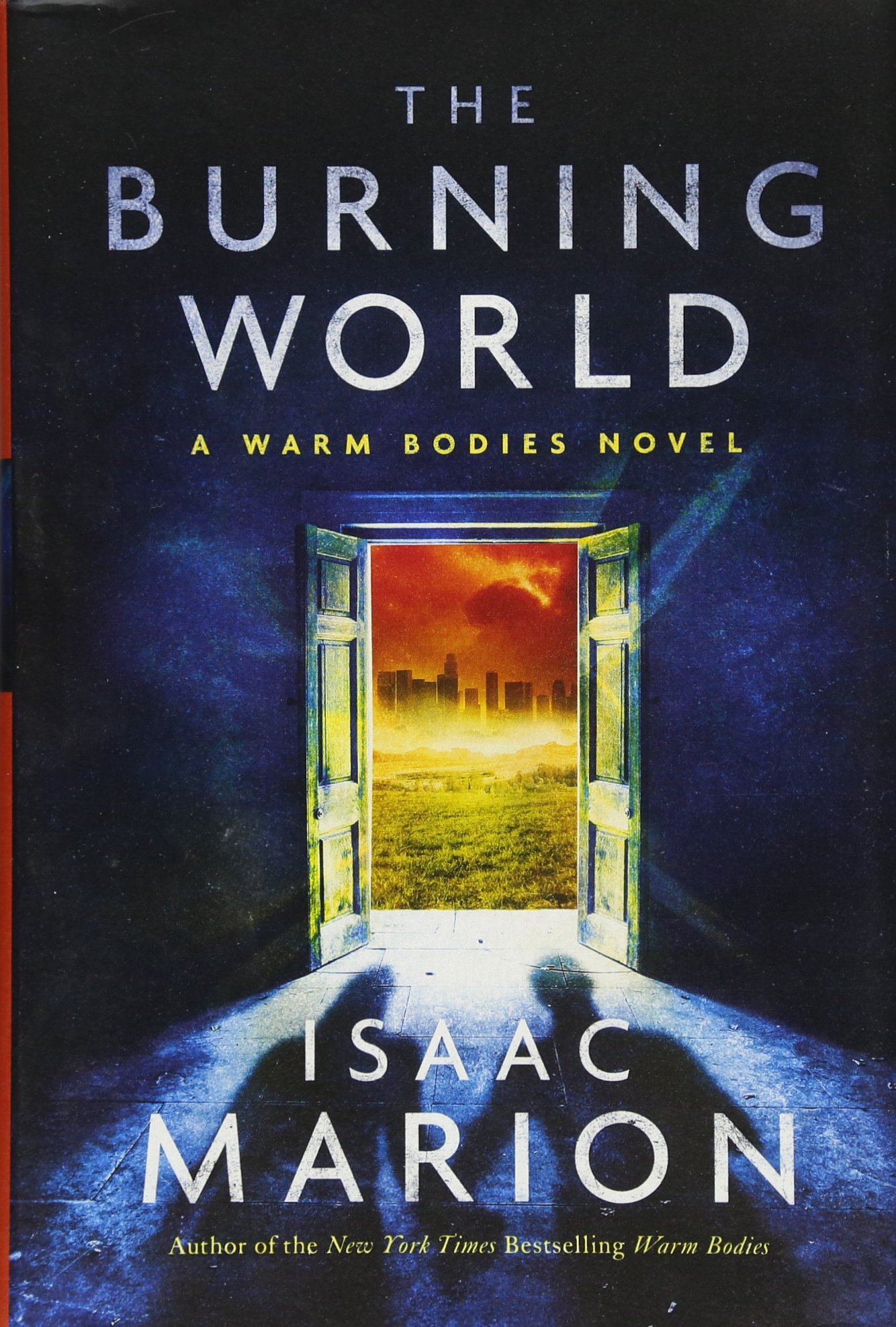
Review of The Burning World by Isaac Marion

A few years ago, when I first heard the premise of Isaac Marion's novel Warm Bodies--a zombie boy falls in love with a living girl--I was at least stopped by the idea enough to see that a lot of people were talking about how good this novel was. So I read it and loved it. In addition to being a unique take on the zombie apocalypse, I was even more impressed to learn that it was a bit of an unusual retelling of Shakespeare's tragic play, Romeo and Juliet. Through Warm Bodies, the reader gets to take a journey through the mind of a not-so-mindless zombie as he struggles with a past he doesn't remember and a strange desire to protect a girl named Julie that he should want to devour. Warm Bodies ended with R, the zombie protagonist who can't remember what his name was before the apocalypse, rediscovering his humanity and finding life again. Then the story ends.

Except it was only a beginning. R and Julie showed that being a zombie could be reversed. The Dead could become the Living again.

But in The Burning World, Isaac Marion's follow-up to Warm Bodies, is a much more dangerous place than we realize, and not just because of zombies. If the previous novel ended on a note of hope that things could get better in the world, this new novel demonstrates that things won't get better without a significant fight.

As the book opens on R and Julie trying to create a life together, R is trying to remember how to be a human. Though he's headed in the right direction, he hasn't quite made it yet, and he still has much to learn. The memory of who he once was is still a mystery, but it's one he doesn't care to unravel anyway because he only wants to focus on the future with Julie. Their chance at happiness is soon interrupted when a militia group called Axiom comes to take over their home in Citi Stadium. Axiom's idea of rebuilding society doesn't include the zombies that are now reforming, nor human freedom. As everything R and Julie have begun fighting for becomes threatened, the two find themselves on the run across the country with two of their friends and an unlikely ally, a man named Abram Kelvin, who wants nothing more than to disappear off the grid with his daughter, if only Axiom will let him.

Perhaps the most gripping part of this novel is the way R gradually remembers who is and how he copes with the kind of person he's discovering he was. The mystery of R's identity is reason enough to keep turning pages, but Marion also delivers fast-paced action and surprisingly deep philosophical reflection on what it means to be human.

I don't really have any criticisms of the book. I will say that I wasn't as interested in reading it as I was the first book because I didn't imagine the story could get better after Warm Bodies. I was glad to see that I was wrong.

The Warm Bodies series is a unique take on the zombie apocalypse genre that has become so popular in recent years, and so far, this one gets better with each book. I look forward to diving into the finale called The Living next.

Monday, May 28, 2018

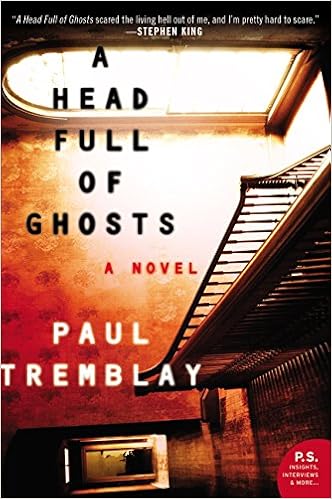
Review of A Head Full of Ghosts by Paul Tremblay

I've always been a fan of really good demon possession stories, probably ever since seeing The Exorcist as a young child. There's something about the confrontation of genuine undeniable evil in these stories that gives me hope that evil can be faced and defeated.

I picked up Paul Tremblay's A Head Full of Ghosts because it's about a young woman and her family, who are portrayed in a reality television show as the family struggles with the young woman's demon possession. The story is told from the present day by the possessed girl's sister Merry, now an adult, as she relates what happened in her house from her perspective when she was a little girl.

The point-of-view of young Merry as she recounts the story reminded me of my own daughter, and that added to the terror of the story. Merry is close to her sister, but she doesn't understand what is happening to her as she begins acting strangely, playing terrible tricks on her, and freaking out her parents. There's a sense of foreboding throughout the novel as you wonder what exactly happened to Merry's family. What happened to Marjorie? Was she really possessed? Was she healed? Did things get better?

This was a great story from beginning to end, and I'm interested in reading anything else Paul Tremblay has written as a result.

Monday, June 5, 2017

Reading What is the Bible? by Rob Bell

I'm reading Rob Bell's new book about the Bible, aptly titled What is the Bible? I've been a fan of Rob's ever since his Nooma video days. Of course, Rob has become famous in recent years for questioning many of the things orthodox Christians believe. The firestorm began with the release of his book Love Wins, which challenged many of the teachings the church has about hell.

I don't agree with everything that Rob says, but I do think he has a lot of important things to say and gets people thinking creatively. With that said, I'm really enjoying the book so far. Most orthodox Christians would probably shy away from the book simply because it's written by Rob Bell, but I think it's worth a read from what I've read so far. He says some enlightening things and some questionable things.

Most importantly, however, he gets people thinking about the Bible and the God it points to. I'm looking forward to writing a more detailed review of the book when I finish.

Monday, May 29, 2017

A Bittersweet End of the School Year

The end of every school year is bittersweet. Of course, summer vacation is exciting. But there's something about saying goodbye to these students that I've spent more days with than not over the past nine months, especially when so many of them come to say goodbye and offer their kind words on the last day when they don't have to.
Every year, I think to myself that this is the class that I'll never forget. Then this year's freshman class walked in, and now they also are the ones I will never forget and that has made the most impact on me. I'd gladly teach them another year if I could. I am truly blessed to have a job I never dread going to each day.

Tuesday, May 23, 2017

Review of Walking on Water by Madeleine L'Engle

I'd heard of Madeleine L'Engle's Walking on Water many times but never read it until recently. In fact, it's the first book of L'Engle's that I've read, and it makes me want to read more books by her. L'Engle was a storyteller who also happened to be a Christian. Being an artist and being a Christian seems to come with certain struggles. There's the question of whether or not the things we create are created for the primary purpose of trying to evangelize. What if something we create doesn't lead someone to become a follower of Jesus? What then?

What I loved about L'Engle's book was her assertion that we created by the Creator to be creative, and to be creative is reason enough to create something new. The stories we write don't have to be "Christian" in nature because Christian was never meant to be an adjective. L'Engle encourages artists who are Christians to be who they are but to create art that is true to who they are. The stories we tell should reflect our worldview, but they shouldn't be just to lead people to Jesus. L'Engle charges that art created solely for the purpose of evangelism often feels forced and just isn't organic. We do our art and the people who might enjoy it a service if we don't create something that is true and organic to who we are.

Walking on Water is a fantastic journey through L'Engle's own experiences as an artist who is also a Christian. I'd recommend it to creators of all types.

Review copy provided by Blogging for Books

Sunday, October 9, 2016

Review of Finding God in the Waves by Mike McHargue

I grew up assuming God existed because that was what my parents and my church told me. I never questioned their credibility. I just believed they were telling the truth and evidence wasn't required. I became a follower of Jesus when I was fifteen, and all was well. Except the older I got, the more questions I had. Certain things about the Bible didn't make sense. I also had a fascination with science, which often comes into conflict with religion and faith. In college, I decided the evidence for God's existence was weak and turned away from my earlier belief. It was scientific evidence that led me back to a belief that God must be behind the universe we live in.

My story is exactly why I couldn't wait to read Mike McHargue's book Finding God in the Waves. I still have questions, many years later, and Mike's story is similar to my own. When I picked up the book, I almost skipped to the second part, bypassing Mike's personal story. Not that I thought it would be boring, I just wanted to get to the evidence part. Thankfully, I decided to read Mike's story first, which resonated with my own experience on almost every page. It's a powerful story of losing God and not so much finding him again but being found by him instead.

Then in the second part, Mike outlines the evidence for why we should believe. He covers God's role in creation, how neuroscience points us to God, and why we can trust that Jesus is who he says he is. Some things can't be easily explained by science, but so much can, and so much of it points to God.

Finding God in the Waves may not convince everyone, nor is it supposed to, but for many, Mike's story is a welcome one because of its honesty with the experience many of us share.

Review copy provided by Blogging for Books

Wednesday, March 16, 2016

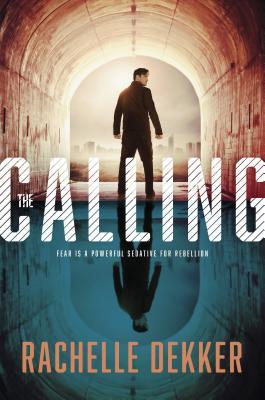
Review of THE CALLING by Rachelle Dekker

Rachelle Dekker, daughter of bestselling author Ted Dekker, returns to the intense dystopian world she established in her debut novel The Choosing with the second book in the series The Calling. In The Calling, a secondary character from the first novel takes center stage as he leads a team of Seers back into Authority City to rescue other Seers out. The Seers recognize the oppression of the leaders in Authority City and the false representation of God's law, but they're nearly powerless to do anything about it. As Damien Gold, the city's newest president, ramps up the executions of the followers of Aaron, the Seer's mysterious leader, Remko, Carrington, and their team must risk their lives and the future of their movement in order to save as many people as they can and show the Authority that they won't just accept things blindly anymore.

I loved The Choosing, and as a longtime fan of Ted Dekker, I was very impressed with the skill Rachelle exhibits that's every bit as intriguing as her father's. There's no doubt that she learned a lot from being the daughter of Dekker, but her stories have a distinctive feel that's all her own.

The story was reminiscent of when I read The Hunger Games. It's a very different story, but it definitely had that feel. In fact, it's one of the reasons why I enjoy the story because when I finished The Hunger Games trilogy, I wanted to read something that made me feel the way that story did.

The first book in the series was written from Carrington's perspective, and the The Calling is from Remko's perspective. The transition from female to male voice in between books was flawless and you get a real sense of the struggles Remko deals with, especially his fear. The only complaint I have about the book is that I wish the theme of the book hadn't been written as a subtitle on the book's front cover. I would have rather discovered that from my own reading of the story, rather than having it fed to me before I even began the book. Of course, that's a publisher issue rather than an author issue. The theme is handled well, and I could identify with it.

Rather than ending this review with a "If you're a fan of Ted Dekker... ," I'd say if your a fan of fast-past thrillers that deal with some of the world's most burning questions, check out The Calling. I look forward to the conclusion of this trilogy.

Review copy provided by Tyndale Blog Network

Sunday, January 24, 2016

Review of HAPPINESS by Randy Alcorn

I've enjoyed Randy Alcorn's work ever since discovering his book Heaven in the wake of my grandfather dying several years ago. What I enjoy about Alcorn is his commitment to digging deep into the Scriptures and discovering what others often miss along the way. That's very much what reading Heaven felt like when I first read it.

In his latest book, Happiness, Alcorn tackles the question of whether or not God wants us to be happy. Christians are frequently taught that God cares more about our holiness than our happiness. Often, we're told to have joy instead of happiness, as if the two are completely separate things. With these teachings in mind, many Christians assume a life of grudging sacrifice is what God most wants for us. Happiness presents a God who not only desires our happiness but is himself infinitely happy.

Like Heaven, Happiness dives into the relevant Scripture passages to challenge the assumption that God isn't interested in our happiness. It turns out that God cares deeply about our happiness and fights for it every day.

Happiness is a game-changing book because it challenges something many of us have accepted as part of the Christian narrative for so long. Happiness is important. God is happy, and he wants to share and expand his happiness with us.

Review copy provided by the Tyndale Blog Network

Saturday, November 14, 2015

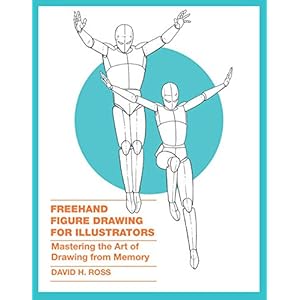
Review of FREEHAND FIGURE DRAWING FOR ILLUSTRATORS by David H. Ross

Drawing from a photo as a reference is difficult when you're first learning how to draw, but not as difficult as trying to create a drawing on paper from just your imagination. The proportions inevitably end up imperfect, and your drawing itself comes out looking nothing like you imagined. That's why Freehand Figure Drawing for Illustrators is such a helpful book.

This book helps you to develop the skills to draw any figure without reference and create drawings that come out just as you imagined them. After some foundational instruction on perspective in drawing, the author, David H. Ross, walks readers through several types of figure drawings, giving them the reference points to draw any figure from imagination.

If you want to learn how to draw from memory, Freehand Figure Drawing for Illustrators will help you to develop the skills you need.

Review copy provided Blogging for Books

Tuesday, October 13, 2015

Review of THE STORY OF GOD'S LOVE FOR YOU by Sally Lloyd-Jones

I have loved reading the Jesus Storybook Bible to my children because it paints a clear and endearing picture of God and his pursuit of us in the life of Jesus. Now, Sally Lloyd-Jones repackages the text of the Jesus Storybook Bible for adults. 

What's great about Lloyd-Jones' writing is that the stories are beautifully told and cover key points in the entire biblical story. A common refrain of the book is that every story of the Bible whispers the name of Jesus. It's a fresh retelling of the redemptive story that is faithful to that story.

If you've never read anything by Lloyd-Jones, The Story of God's Love for You is a great introduction. If you have children, the Jesus Storybook Bible is just as great.

Review copy provided by Book Look Bloggers

Thursday, August 27, 2015

Review of Centralia by Mike Dellosso

Centralia is the latest novel from Mike Dellosso and his first to be published with Tyndale House. I've been a fan of Dellosso's ever since I read his book Scream, so I'm always eager to read whatever he has out next. Centralia is a gripping story because of its premise. A man named Peter Ryan can't find his wife and daughter, and although everyone tells him they died, he refuses to believe it's true. He begins a journey to find the truth and soon discovers that not everything is as it seems.

Dellosso has a way of crafting a story that keeps you guessing and also gets you thinking about deep questions of life. This book has been compared to The Bourne Identity, and there are some similarities, but the book struck me as the kind of story that Dellosso would write.

If you haven't read a Mike Dellosso novel, he's a truly gifted storyteller. Centralia is another example of this.

Review copy provided by Tyndale Blog Network

Sunday, August 16, 2015

Review of THE MARTIAN by Andy Weir

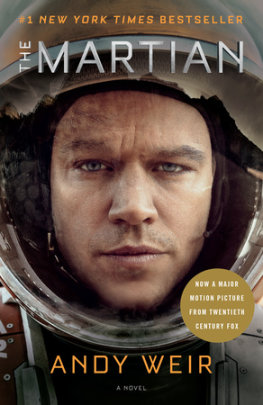
When Mark Watney is believed to be dead on the surface of Mars, the rest of his Ares 3 team is forced to leave the planet before ever finding his body. But Watney isn't dead, and now he's alone on the surface of Mars with limited supplies and no way to contact his crew or Earth to let them know he's alive. Anyone in his position would likely lose hope of ever getting off of Mars alive, but Watney is resourceful, and he knows another team will return to Mars someday. If only he can gather all his resources to survive.

The Martian by Andy Weir was one of the most intense and most brilliant novels I've ever read. Weir clearly spent a lot of time researching for his story to make it seem believable. After all, no one has ever been on Mars, and any chance of survival seems hard to fathom, yet Weir tells a story of a man who is desperate to survive and has the wits to give it a solid try.

I loved the way the story was told. Watney writes log entries almost every day of his experiences on Mars. Those log entries are periodically interrupted by third-person narratives because Watney does face death at almost every moment. It's definitely one of those stories that keeps you on the edge of your seat to find out what will happen in the end. I highly recommend reading The Martian.

Review copy provided by Blogging for Books

Sunday, May 24, 2015

Blog Tour Review of THE CHOOSING by Rachelle Dekker

I had the privilege to read Rachelle Dekker's debut novel The Choosing a couple weeks before it came out, and it's really good. Check out my fiction/storytelling blog The Whisper Project for my full review of the book.